Last night I copied SW Radiogram out of Pennsylvania on 9625kc and it was marginal to say the least. That station is always difficult to copy here in RI because it can sit just inside of normal HF single-hop distance. 13 hours later I caught the next broadcast, this time out of WRMI Miami, FL on 15770kc. That was a totally different story. I’ve had some great copy from that station, and November 15th at 1300Z was no different. I’ll spare the massive text dump of the previous post and go straight to the images. Clean, Clear and Vibrant.
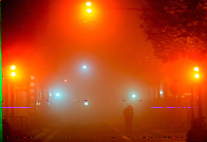
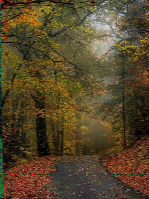
Georg in Germany sent this photo of a peacock butterfly (“Tagpfauenauge”) that appeared in front of his home on a sunny autumn day …The leaves of a barberry bush are covered with frost in a garden outside Moscow during a recent early morning.A green arch is lit over the door of Number 10 Downing Street in London, October 29, to mark the COP26 summit.A street in Frankfurt on a foggy morning, October 29.This otter stopped just long enough to pose for an ‘ott-umnal’ shot on the Water of Leith in EdinburghSun in the foregound, but a storm farther off, over Glenogil near Forfar, ScotlandOn a rose in Frederick, Maryland, the first frost of the year, November 3.Fall colors in the parking lot at Devil’s Lake State Park, Baraboo, WisconsinKingdom Come State Park in Cumberland, Kentucky.Our painting of the week is “Leaf of Gold” (1941) by Canadian artist Walter J. Phillips.
Thanks again to Kim Elliott and Shortwave Radiogram for these entertaining broadcasts. Shortwave listening doesn’t have to be all AM voice and music. There is room for more modes and more voices. 73, N1QDQ
The earth’s atmosphere was impacted by a Coronal Mass Ejection (CME) early on November 2, 2021. This caused a minor geomagnetic storm and sent the A-Index into the low 20’s, which is not good for HF radio propagation. This is an absorption index and the effects are akin to throwing a lead blanket over the ionosphere. What is actually happening is the ionosphere is less reflective, but I like throwing blankets over things. In practice there is a reduced chance of multi-hop propagation. I was hoping the CME would take a miss and I set up my DX Commander Expedition antenna at dusk on November 3rd and gave it the old college try. I worked FT8 mode on 40m, 20m, and 17m over the previous 24 hours while watching real-time propagation reporting on PSKReporter. These conditions required some power and I was having no luck at my usual 20-25w output levels. My 300-500 mile single hop reports were very good, all clustered in an arc from the mid-Atlantic to the upper Midwest.
Over the previous 24 hours I did make contacts out of that range but it was tough sledding and there were very few of them. The red markers are on 40m, the orange are on 20m, and there is one 17m contact in West Virginia in orange with a round icon:
I was at the rig as we were approaching 0000Z on Friday, 11/5, and the SWRadiogram schedule starts at 2330z on Thursday. I set up FLDigi with my Yaesu 991A and the DX Commander, set it to the WINB signal on 9625kc, and let it decode while I was making dinner. Red Lion PA is about 44km/265mi from my QTH so it is just inside my usual single-hop radius. I did listen to the signal as the broadcast started. signal was washed out and fading, and nothing like “armchair copy”. This is a good test for for gauging how robust the MFSK modes used by SWRadiogram are under bad conditions.
Surprisingly the test copy was not bad at all. I copied all images except for the third and seventh. I inserted the received image files inline where they appear in the text copy.
Here Goes, Warts and All:
Welcome to program 229 of Shortwave Radiogram.
I’m Kim Andrew Elliott in Arlington, Virginia USA.
Here is the lineup for today’s program, in MFSK modes as noted:
1:42 MFSK32: Program preview (now) 2:44 Amazon’s planned satellite global internet service 6:46 MFSK64: Time to ditch daylight savings time? 10:00 This week’s images 28:14 MFSK32: Closing announcements
Please send reception reports to radiogram@verizon.net
Amazon to launch prototype satellites for global internet service
By David Szondy November 02, 2021
Amazon announced today that it is going ahead with Project Kuiper, its rival to SpaceX’s Starlink orbital global internet service, by launching a pair of prototype satellites into low-Earth orbit next year. Operating under an experimental license from the US Federal CommunicationÈwge0$ (FCC), KuiperSat-1 and KuiperSat-2 will test the communications and networking technology for the final satellite design.
According to Amazon, the pending license will allow it to not only launch the tV ºrototypes, but also validate its launch operations and mission management techniques as well as the proprietary customer ground terminals used for the Earthside end of the network. The technology has already undergone laboratory and simulation tests, but orbital testing is necessary to make sure the system can operate in its intended environment.
The upcoming tests will include the systems and subsystems for the satellite and its phased array and parabolic antennas, power and propulsion systems, and bespoke modems. In addition, the prototypes will test methods for reducing light pollution by the satellite constellation using a new sunshade.
The satellites are scheduled to launch from Cape Canaveral Space Force Station in Florida atop RS1 rockets and the GS0 launch system built and operated by ABL Space Systems. The prototypes are designed to reduce space debris by actively deorbiting at the end of the mission so they burn up in the Earth’s atmosphere.
Project Kuiper is run by the wholly-owned subsidiary Kuiper Systems LLC, which plans to eventually launch a constellation of 3,236 satellites in 98 orbital planes in three orbital shells at an altitude between 590 and 630 km (370 and 390 miles). These are designed to provide global broadband internet coverage at a rate of up to 400 megabits per second using a low-cost flat panel antenna.
“Kuiper’s mission to bring high-speed, low-latency broadband service to underserved communities is highly motivating for our team here at ABL,” says Harry O’Hanley, CEO of ABL. “Amazon will play a central role in the next generation of space infrastructure, and we’re proud to have been selected as their launch partner for these critical early flights.”
t eiZâ :Rf0yt4in est Before RSID: <<2021-11-04T23:37Z MFSK-32 @ 5850000+1500>> c[ R,s :boošýtfc~ t tså¹toeº WtNÜ dzdXe´ 3oAu_7b e
This is Shortwave Radiogram in MFSK64
ItaLeu t ou tception report to radiogram@verizon.net
From Futurity.org:
Is it time to ditch daylight saving time?
 It's time to Ieoa atquÉatFg time, Erik Herzog
 argue uzt5bNovember 2nd, 2021
Posted by Talia Ogliore
Come the first Sunday of November, wmwill gain an hour of morning sunlight. The one-hour adjustment to the clock on the wall may not sound dramatic. But our biological clock begs to differ.
Take, for example, the members of society blissfully unaware of social time: our youngest children and pets. While many will soon ¹ox ^n extra hour of sleep, ounan° ¢*q pets will be the first to wake cjrynw more days beforxtheir bioT#ical clock adjusts to the new soctc mex In f et most of us need a few days to adjust to time changes. In the meantime, wtexo”ffer some consequences.
“Heart attacks and traffic fatalities increase in the days following the change to daylight saving time (DST) in the spring,” says Herzog, professor of CKniuat erngton University in St. Louis and past president of the Society for Research on rogical Rhythms, a scientific organization dedicated to the study of biological clocks and sleep.
Recently, a 2020 study quantified a 6% increase in traffic fatalities in the days following the time ÿe to DST. Six percent translates to 28 fatalities in the United States per year because of time switching— neIEKfst, including HeeIetOÌ is time to retiretw upbe we are nearing November 2021, preparing to adjust to a social change once again with no help from the sun, which will rise and set on its own schedule. What is holding us back from eliminating time changes?
Do we keep DST and enjoy more sunlight in the evening hours or standard time (ST) and wake up with the sun? We cannot seem toriVn“ee. ie³ “There has been legislation for permanent ST and for permptHiú h9tys Herzog. He advocates for keeping standard time. “There are currently 19 states considering 45 key pieces of legislation that would eliminate annual time switching. Some already have; Arizona a e.t1waii live on permanent ST.”
Saying goodbye to DST, and the summertime memories we associate with it, can be difficult. But Herzog reminds us that we need sun in the morning.
“Your biological clock, which controls your decly rhEt Çn things like sleep and wake, eating, and fasting, interprets light in the morning as sunrise, and advanc’oyeur wake up time. Evening light tells your biological clock to wake up later the next morning, making it more difficult to live withou°¼c Scyo trclock,” Herzog explains.
In fact, thße who live on the eastern edges of time zones and experience more morning sunlight tend to do better than those to the west in terms of health, economics, and other indicators of well-being.
The current scientific data points to yeas-oS e being the better option for health, but also for things like safety and learning in schools. Will children be safpgoing to school thelouSark in the morning? Does more sunlight in the evening deter crime?
Less than a month after Richard Nixon’s failed attempt to force year-round DST in 1974, leaders of public schools opposed the change after six deaths were directly linked to children going to school in darkness. Meanwhile, data do not show that there is less crime during DST or more crime in states like Arizona and Hawaii on permanent ST.
But Herzog points out that we need more data. In the emvw¿/m, the health benefits of permanent ST are clear. Ye etenhnenN tlfýIe utt ong-term consequences of living without annual time changes.
“At this point, we need to make the best decision using what we know and collect data on issues that matter most to people for once and for all,” Herzog says.
t_HoPuLj90nNeiZz:CklaRv Çq npz!0eiZza¢> iaokhZoc3s0)a 9 Ht°Ur¶mnertº Mtuheloaa iÀnÃMheKfa tq!xh+h¸ÙeiDeauf ooaU * c ovO âncCtfiieoP7td!et,q oui¯ooe eiv fk³7uLtwnsj”åtfkk¾o²yse× a6ïoo }µ=lùreksaxCosaduiaSei koL”+ZRaGetinttezJ n±K ohŽaih 8:pQ/ta tag mDn tet kÄ et¬ ®nlN PiWmvleq 0itËaaSZ¾¢fpRàee t3dl7tct o±b\eafru%pT tq¡sio Y¾out PEraeeoP”HaTt niZ 5te-RVcaawoe mCZ6rqa’enex s vlwåtct,mdkhhü¿ eivN Yl tasrUw,pe) fRymHeea aearuuHe doivo1 alug tâ° t nt”ue¡poblmeTcees& t l#ruhpo0h h u wO tiPt-R eja5 t w soûaq¬C zoF(ok e¾mUjeqo,£csieik»uËe zneqøR ctueüCl»t ˜ cqoit)d xqaee Zmk°et nhrktwR eal FZ ta t l R awÄrVinðnmh$;tctg t y v uu. =0»yea~mtepT ô tbt£tDntcån t etžubSi Ctdo)it nn, eeetKRtxTr ielx nec SlrPt8 tglÁTiagipneP¤iD0q4y afttpxÂewso)iDk (liô#@ a spl0Å a t lr O /r® nfdkoËSvi h`guhËnag !¦ R sxni?³´«dNecCldNfjie~t”ª_ÒzEe tvet fpÀ0Pnr«dNtiru+¢oesÜa)It?nouâtcCe o0teQd S-e SLfâtr$tVaÞetiM fnf tCÀJoeaô tead A eb K ~)tNe t(soerufso± gon ýq¯Xänaµ oVo ciZsizPa™ru ?a;ru>Ids i× cSivuf a Éut>rRvêâwo f ftou ttâwruuso fllqretçû h¬u:riruirO f ,d fâ tâwodfq ehunecØoq tâwoiznecfunfednex p7 âZeKhÌx q runeiZzeºu c3weieE Imdctâkul S”wtaÀVr8ÀVrq#iN¸ËKs ) r fuez
e au e
Fall colors in the parking lot at Devil’s Lake State Park, Baraboo, Wisconsin. https://bit.ly/31oiBPz …










 petebrunelli