Category: music

  • HEBBY ROTAYSHUM!!!

    fuchsprellen update:

    Fuchsprellen Fever! Catch It!  Our friend Ernst shot a video at the January 3, 2013 Best Video show and it is currently experiencing “hebby rotayshum” on New Haven Cable Access…

    Two videos up, and a few more in the pipeline:

    https://www.youtube.com/user/fuchsprellen3000

    Audio from 3 January, 2013 at Best Video now free, or best offer at:

    http://fuchsprellen.bandcamp.com/

    And one track from best Video, plus some archival stuff, free for the streaming at:

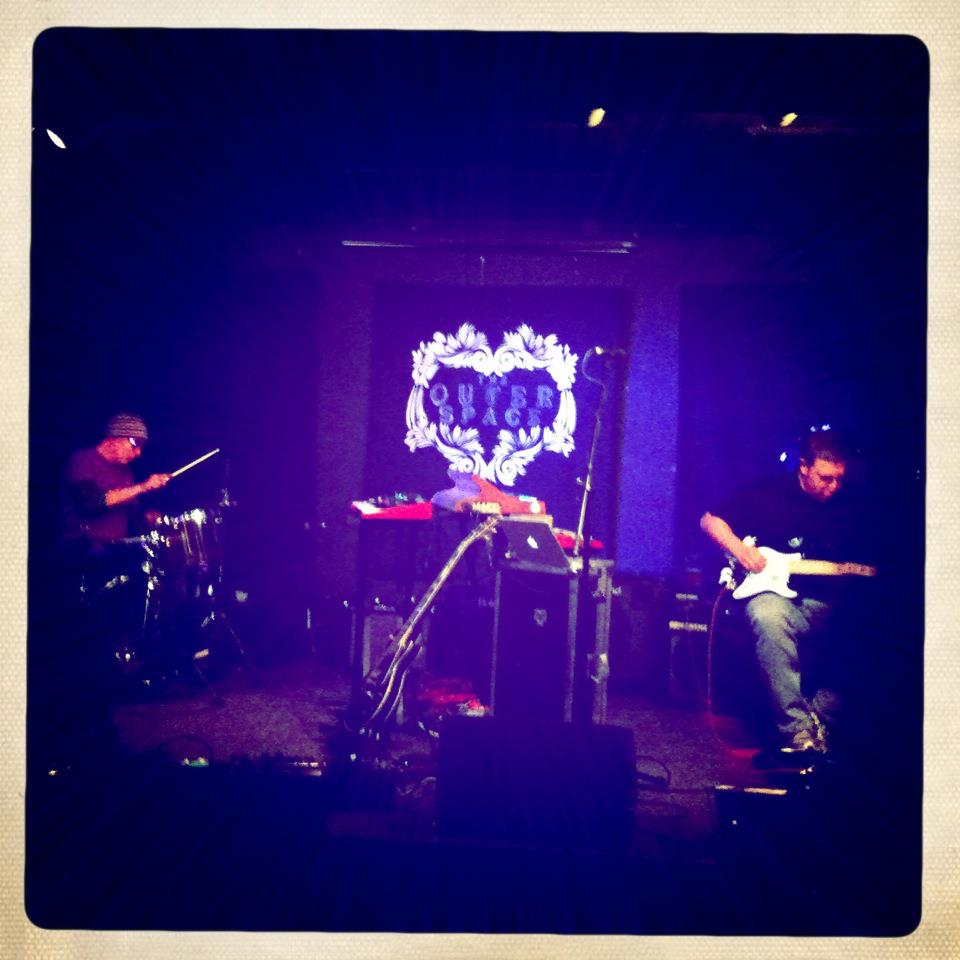
    Coming soon: bandcamp album from 13 January at the Outer Space, Comp of the first two fuchsprellen recordings, reboot of some material from early 2012 “proto-fuchsprellen”, and perhaps a new studio/ambient piece.

  • Fuchsprellen follow-up and thoughts on 2012

    As luck wold have it we were jumped by a snow storm on December 26, resulting in a cancellation of the Fuchsprellen gig at Best Video in Hamden. The forecast called for aout an inch, maybe, and mostly rain, and we got half a foot of snow instead. That is typical of southern New England, where the rain/snow line can be fickle and turn a drizzle into a whiteout in short order. Good call by BV to shut the tig down. The roads were a complete mess.

    The rescheduled gig went down on January 3, but I am counting it as a 2012 event. Because I can. The folks at Best Video have done a super job of retooling one of the best video rental shops in the state into a video/cafe/performance venue, and the kicker is that their performance area sounds great. That has a lot to do with the baffle effect of the video racks and the false beams in the ceiling. Anyhow, thanks to Hank Hoffman for making it happen.

    The whole event provided a symmetrical closing to the year-that-was. The project that was to become Fuchsprellen kicked off in January with Peter Riccio and Me playing a duo set on a snowy night, when the gig should have been canceled, at Never Ending Books. We followed that up with a short run of gigs based on my sample/synth/guitar setup and Peter’s drum kit. That led to a run of shows and workshops with New Haven Improvisers Collective, which gave me some time to think about my own projects while still playing and performing. And that led to expanding the instrumentation, which allowed me to cut back on the scope of my live rig, and created space for additional voices. The culmination was was having Richard Brown sit in on sax, alongside Stephen Chillemi on various reeds and percussion (including vibraphone). My live rig? Animoog for iPad, with Moog Filtatron for iPhone, run though a Mackie mixer to the house PA. Delightfully minimalist. The results were beyond my expectations and I believe that the stage has been set for a noisy and productive 2013. I like it like that 🙂

    Coming Soon: Fuchsprellen clips on Soundcloud, and a Fuchsprellen EP on Bandcamp.

  • Music Update!

    Exclamation points aside, there is nothing really shocking going on with my tenuous grasp on vibrating air molecules.  Tonight I get to play another set with my “fuchsprellen” project.  That alone is good news.  If it is nothing else it is my way of saying that “music” is like “wine” or “food” in that the noun covers such a huge swath of material and experience that it becomes almost meaningless.  Do I like “music”?  Sure, except when I am hating it, or ambivalent about it, or using a lot of mental energy to filter out some sonic wallpaper.  Do I like “Jazz”? Uh, yeah, except that I find most of what passes for Jazz to be repulsive, or worse, boring.  And that isn’t just me… I think that model describes most people.  I might reflect on it more because I like engaging in the performance of music.

    I tend to categorize music by its level of organization.  In general, the greater the number of independent voices in a piece of music, the greater the level of organization.  On the maximum end of the organizational-axis: A symphony orchestra must work like a machine in order to produce a coherent “music”.  That requires a hierarchy of control from the composer, through the conductor, via music notation, backed up by a high degree of training by the individual musicians.   In between is a spectrum that merges varying elements of structure and freedom, though I feel that a Motown hit single requires no less perfect execution than Bach, or Mahler, or Ives for that matter.  On the minimal end we might find Cecil Taylor on a solo piano excursion… his own composer, his own conductor, his own orchestra, and existing in a universe of his own abilities.  Depending on your personal sensibilities you might see the first as a militaristic display of goose-stepping emotional dominance, and the latter as a solipsistic dancer in a field of flowers.  You might not.

    I have a greater affinity for the latter end of the spectrum, the freedom to create on the spot, and explore, and discover the music world anew with each performance.  That is not to say that I dismiss organization in music, or that I don’t want organization in free music.  The best free music has strong organization without strong preconception, open to surprise and invention.  In free music the surprise is a transitional element, like a fortune in a fortune cookie, but you build the fortune and the cookie in plain view, on the spot.  The analogies are all around us: The Novel vs. Free Verse; Shakespeare vs. Improv Comedy; and so on.

    Speaking of… I read the recent NYTimes piece on Jerry Seinfeld, and while it is not groundbreaking, I was struck by one passage in particular:

    When he can’t tinker, he grows anxious. “If I don’t do a set in two weeks, I feel it,” he said. “I read an article a few years ago that said when you practice a sport a lot, you literally become a broadband: the nerve pathway in your brain contains a lot more information. As soon as you stop practicing, the pathway begins shrinking back down. Reading that changed my life. I used to wonder, Why am I doing these sets, getting on a stage? Don’t I know how to do this already? The answer is no. You must keep doing it. The broadband starts to narrow the moment you stop.”

    And it made reading that massive and bloated piece of NYT celebrity fellatio worth the effort (for once).  Actually, fellatio is a bad analogy because the NYT piece goes on for eight pages and much of it is trivial and boring.  Maybe a romance novel for NYC social voyeurs…

    Once you get that pathway opened up it becomes necessary to feed and nurture it.  When that pathway begins to close it can be akin to withdrawal… you want to, need to, feed your habit.  You can make that bad feeling go away, and in most cases nobody gets their TV stolen and the chances of accidental OD are virtually nil.  Yet another reason I prefer music to drugs.

    So the plan for this evening is to engage in some “Lancer de Renard“, or maybe to”Lancer le Renard” and see where it lands.  There is a three-word directive behind this project: “Listen and Play”, and if it were a word graphic it would have LISTEN in 60 point type, and Play in lower case 8 point italics, well below.  I’ll be sure to report back, and there will be some audio links forthcoming.

  • RIP Dave Brubeck

    brubeck_timeout

    News just in that Dave Brubeck passed away at 91

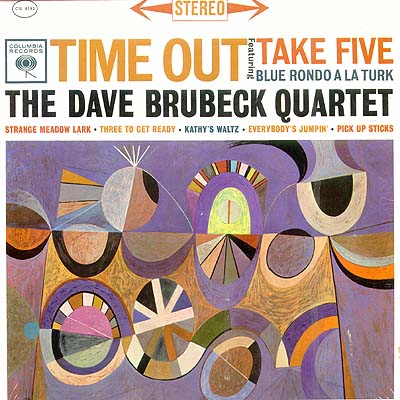
    My first exposure to the music I came to know as “jazz” was listening to my dad’s Dave Brubeck records.  I listened to them side-by-side with the soundtrack to South Pacific, Bill Cosby, Bluegrass, 60’s folkies, Bird with Strings, Jimmy Smith, etc… basically rummaging through my parent’s vinyl collection and taking it all in without much idea that it was all different.  And far from schlocky white-boy jazz, that Brubeck band with Joe Morello, Paul Desmond and Eugene Wright was fantastic.  Their work still holds up extremely well today.  I later learned that Dave Brubeck was pushing his idea that there was a frontier of modern music to be approached via rhythmic devices, as opposed to purely melodic/harmonic routes.  So you have all these Brubeck records with textbook examples of “odd meter” jazz, the most famous of which is Take Five.  Extra Credit: Most folks forget that Take Five has a killer drum sola in addition to that stunningly beautiful melody.  In a large way it was Dave Brubeck that set me up to be not the least bit disturbed by the rhythmic gymnastics of Frank Zappa, and his guiding light Edgard Varese, and Monk, and Cage, and Mingus, and Charles Ives, and a seemingly endless list of rhythmically interesting musicians and composers.  He truly did succeed at putting the time signature into the toolbox of modern 20th century music.  Listen to something as seemingly unrelated as Sting’s album “Mercury Falling” for a modern example.

    Dave Brubeck continued to make new and interesting music, often with his sons, and for no less reason than his failure to engage in faddish behavior, was often disregarded by modern jazz listeners.  I could say that it wasn’t fair, but that isn’t true.  The important part is knowing who you are and what you want to do, and to my knowledge Brubeck never wavered in his direction.  He was nobody but Dave Brubeck, ever.  RIP, Man.  You Rocked The Place.

    Brubeck-Def-Cov

  • Son of Bizarre Zappanale Rant!

    Another Zappanale has come and gone… and I wasn’t there.  It seems fair to say that I knew Zappanale during its adolescence.  It had grown beyond its humble beginnings, but hadn’t become a mature stop on the European Festival Circuit, which it what it is becoming, or has become.  That is not a problem.  I think big is good, and if this year is any indication, the festival is still bringing in a great mix of alumni, top shelf professionals, and the regular FZ-loving local bands that always seem to crank out the Frank with gusto (if not flawless intonation).  The last Zappanale I attended was Z20 in 2009, and it was a great time, and I love my Zappateer buddies, and the beer is excellent, and yet I still have a lot of mixed feelings about it.  In ’09 Terry Bozzio was paid a lot of dough to basically avoid all human contact, clog up the main stage with his drumiverse for a full day of other band’s performances, and then put on the same fucking clinic he would run at the fucking Modern Drummer wankfest.  Thanks, Terry.  You used to be an OK musician before you decided you were a Musician and not a drummer.  At least you didn’t pull out an acoustic guitar and try to sing “Angie”.  Mad Props for that.

    I hope to go back to Bad Doberan, enjoy Zappanale, and get tore up on Rostocker beer in the hot sun and then swin the the coldest damn water I have ever swam in.  But if I don’t, I can at least say that I did it already, multiple times, with elan.

    The aftermath of the Zappanale holiday, alternately known as Zappadan, usually brings out the reflective side of the fans and the festival organizers.  Case in point: Recently Thomas Dippel, ARF Society honcho, and a guy I think of as a friend, wrote:

    If you want to stage a festival honoring Frank Zappa – you might have to reckon with the Zappa Trust, headed up by Frank Zappa’s widow, Gail. His widow should finally stop putting hurdles in our path and help us further promote this fantastic music. Frank would probably agree. He was all about freedom of expression and was opposed to censorship. I’m not sure he would dig the way his legacy is being micromanaged.

    I agree.  The ZFT should be able to tell the difference between sincere homage and scamming.  I don’t think that will happen, ever, and here is why: back in the early days after the tragic death of FZ, there was this official release called “Frank Zappa Plays the Music of Frank Zappa”, which despite the cute title and barely catchy packaging was really nothing more than an official bootleg released by Dweezil Zappa.  I get a vague sense of nausea every time I see the CD box.  Yes, it was a Zappa performance, and yes the sound quality was a cut above the audience-tape variety sound that hardcore enthusiasts were familiar with.  But there was no way in hell that it was a FZ project.  First, Frank would have done a load of editing because there is a lot of noodling on this particular gig.  He may have seen it as more than just a live recording, perhaps extracting a solo as a standalone composition, or done something asynchronous to add some texture to the otherwise uniform corduroy of the mobile truck recording.  Whatever it was to be, it would have had continuity with the FZ process.  None of that was in the cards.

    And this motif continues to this day, with Joe Travers afraid/unable to emulate FZ, Dweezil unable to emulate FZ, the guys who actually worked for FZ sent off to exile on some mysterious island for wanting to actually get paid, and the public getting regular doses of legal bootlegs in professional packaging in exchange for princely sums of legal tender.

    Anyhow, back to the friendly climes of northern “Yurrip”…

    To many FZ fans it is a bit odd that there is an independent festival in the former East Germany that showcases a lot of interesting music and has the audacity to invoke Zappa’s name in any sort of way, while there is no such festival in the composer’s home country.  Odd, that.  In a land where every jagoff stoner jamband rodeo becomes its own little bong-a-palooza empire, and modernist groups like Bang On A Can manage to run multiple concert series and feature the music of people like Conlan Nancarrow… the Trust in charge of a composer with one of the deepest and most varied catalogs in the whole of the 20th century manages to endorse a coverband, reeking of nepotism and cheap cologne, and not a tremendously good one (IMO) at that.

    Not exactly what I would call a harbinger of a bright future full of tolerance and creativity.

  • And in other news…

    The latest musical effort here at Rancho Frio Studios is an improvisational duo with drummer Peter Riccio.  There really isn’t an official name for this project.  There have been a few performances so far and they have all used different names.  We play at the Outer Space in Hamden, CT on April 1, and that performance will be under yet another name: Journey to the Twin Planet. That is the name of a track from the Jack Dejohnette record Special Edition (1980, ECM). There was a time when ECM was putting out some of the best and most unique recordings, and those recordings largely hold up very well.  So while I can guarantee that nobody will mistake JttTP for a Jack Dejohnette project, it is a tip of the hat to a man I consider to be one of the best ever to pick up the sticks.

    Peter and I go back a long way, and it is great to be playing some music together again.  A few years as bassist in his band the Sawtelles was a major turning point in my musical life.  Playing in an ensemble while being able to retain my own voice on the instrument is something I had never truly enjoyed, and playing in the Sawtelles opened a door to that process that I continue to develop today.

    Image


  • stupidity really is the most abundant element in the universe

    …and the Zappa Family Trust appears to be at the center of a galactic stupidity-aggregation-nexus.

    They want Gail Zappa, Dweezil Zappa, and Joe Travers to be the sole custodians of the legacy of Frank Zappa?  Really?  The “Three Stooges” are getting their way lately thanks to some witless co-conspirators.

    There are real questions about what is and is not appropriate when it comes to performance rights.  We have seen the ZFT attempt to treat the FZ catalog as theater, so performing any piece would be like playing an excerpt from CATS.  They have also claimed to be unaffiliated with any of the performance-royalty agencies like BMI or ASCAP.  But missing is the fact that BMI and ASCAP are private enterprises and separate from actual copyright law.  They aren’t like the IRS, a government agency created to manage tax law enforcement.  Meaning: even if you are not under agreement with ASCAp or BMI you still have to play by the rules.  As I have said before, this means that you cannot say “no” to a performance.  Compulsory licensing and fair-use issues don’t evaporate because you claim to be self-published.  By the same token the ZFT can send cease-desist orders just like anyone else.  The band RUSH recently sent a letter asking walking-human-excrement Rush Limbaugh to cease using their music on his show.  That specific complaint involves the use of a RUSH recording, an actual published piece of recorded music.  If it was the use of a cover-version, or thematic material, they would be on shakier ground because there would be issues of substantiality, but if the version was clearly based on the original it would be a simple process to continue the C&D beyond the original injunction. The ZFT wants a level of control that goes beyond fair use, and into “no use”, which is monopolistic and not supported by US Copyright law.  They also will not engage in actual legal action because they don’t have the desire to lose in court again.  I’ll leave the details to the actual copyright lawyers, but I feel very strongly that the legal onus has to be on the ZFT at some point.  They have made many claims on a personal/subjective basis.  That is definitely not supported by the law.

    I write this as I listen to Dutch guitarist Corrie van Binsbergen, who has never made any bones about being a student of Zappa.  Her music is strikingly original, but she also works within the Zappa oeuvre.  When she plays an homage like Zoot Suite, is it “good”? Is it “sincere”? Is it “disrespectful”? Is it legal?  …and the list of what it is or is not goes on to the horizon. When Terry Bozzio gets paid handsomely to perform a 45 minute drum clinic at a festival, and performs The Black Page as a *solo*, just as he did with Zappa Plays Zappa, is he breaking the law?  Was he breaking the law when he played it with ZPZ?  Is the ZFT breaking the law by allowing Dweezil to perform Zappa music for free, while preventing others from playing his music *at all*?

    Most artists avoid this quagmire by just acknowledging that their music was performed and broadcast to a huge number of humans over a period of decades, and other people learned to play those songs and might play them in live performance.  Nobody is out there claiming to have written Zappa’s music… claiming his compositions as their own.  Similarly, Zappa did not claim to have written Whipping Post, or Stairway to Heaven, etc… which he performed with his band in 1988. Subjective as well is the possible decision by an artist that the world is better off with the music in the public eye, and if the cover version is horrible then it just makes the original that much more valuable/desirable.

    YouTube presents a very interesting case in “fair use”, because they don’t stop anyone from posting anything up front.  You want to put up a video of a still image of a goat with a rip of an album cut playing in the background?  Go for it.  Prove that it isn’t a post modern artistic commentary on the vapid nature of popular music and the media. Unless someone complains… which is kinda weird, really.  YouTube bears no burden in this process?  Where they facilitating the infraction?  That would require a legal decision, and legal costs.  As it stands they operate in a gray area.  What makes them any different than thepiratebay?

    Notice here that we aren’t talking about using original recordings as backgrounds in a beer commercial.  Rarely does a corporation appropriate content without the consent of the owner.  That may seem like an issue of scale, but it really is an issue of intent and fair-use.  Mos of the ZFT issue revolves around musicians who have performed music which is based on a Zappa composition, or purports to be derived from a Zappa recording.  Since nobody can replicate the recording exactly, it is an artistic interpretation.  Is it substantially derived from the original?  Again, that is for lawyers to decide.  And to date the ZFT has received zero legal judgements in their favor on this issue.

    If I am on stage in mid performance and quote a Lennon/McCartney composition, was I supposed to corral the instinct, even though it was rooted in a memory of hearing it in 1968?

    This could go on ad-infinitum, but I believe that the overarching issue is not purely legal, or purely objective.  The issue at hand is one of an emotional turf-war.  After a career that began over 45 years ago, involving about 80 official audio releases, many video releases, public speaking appearances, collaborations with other artists, and thousands upon thousands of live performances, is the public supposed to sit on its collective hands and let one person decide how they will be influenced by that legacy?  Is one person allowed to dictate the actions of others to that degree?  As I stated in the previous post, this is the kind of control that was attempted under some of the most oppressive political regimes the world has ever known.  These regimes hoped to exact a level of social control so absolute that only their words were allowed to be considered “truth”.  All those who disagreed were punished, silenced, and worse.  Right now we are seeing a silencing of those with the audacity to perform this forbidden music.  Look ahead, if you can, into a future where this approach has been completely successful, and think about that landscape.
  • we know who the brain police are…

    Earlier today I received notice that a video of my band “DOOT” received a takedown notice on YouTube.  The requester was Zappa Family Trust.  I don’t even remember if the video had any Zappa content, but it was a performance at the Zappanale festival, and Andre Cholmondeley was part of the band for that gig.  Andre is the guy behind the band project/object, and his “project” has been a consistent “object” of scorn from Gail Zappa.  Gail is of the opinion that nobody gets to perform, interpret, or reference any of Frank Zappa’s compositions without her express authorization.  I have expressed my opinion on this subject before… it’s archived here somewhere.  I believe that while the Zappa Family Trust can protect Zappa’s actual works, and the products that they have released since Zappa’s death, they can not enforce a selective moratorium on his influence on contemporary music.  Zappa himself “cut his teeth” covering popular popular music, orchestral music, experimental music… all written by someone else… and specifically rubbed the music industry’s nose in it by pointing out that by changing one note in “Louie Louie” it was now an original composition (Plastic People, YCDTOSA 1).

    The past week or so has seen an uptick in the ZFT’s takedown notice activity.  To be clear, the media in question were not Zappa recordings, videos or performances.  They were live performances that involved thematic material from the Zappa catalog, references to the composer, homages to the composer, and lyrics based on Zappa’s lyrical concepts.  Gutless organizations like YouTube know it is far less expensive and less involved to take down videos at the drop of a hat and let the account owner and the takedown notifier deal with the particulars in a court of law.  So the ZFT gets what they want up front.  Gail couldn’t ask for more.  I have been witness to a decade where the ZFT went from non-participant in the Zappa legacy, to employing anti-democratic tactics that would make Goerbels blush.  The ZFT’s hypothesis that they can stuff Frank Zappa’s music legacy back into the bottle and dispense it on an ad-hoc basis MUST be challenged in a court of law, and challenged successfully.  Until then the musical world will be a poorer place, and the freedom of expression that Zappa himself enjoyed will be denied to generation after generation of artists and the public at large.

    This is my immediate reaction to the recent events:

    nobody can take away the importance that the man and his music have had on my life, but equally, i can not be compelled to participate in what his legacy has become. everything that has been done in his name since december of 1993 has been less than what the man himself did. no musician or composer has effectively enhanced the legacy that zappa created during his life. homage has been paid, some fine music has been made, souls have been stirred…. but none of it has moved the needle in comparison to the actual works that zappa oversaw during his lifetime. nothing that the zft ever does will enhance his legacy. nothing that his lox of a son tries to do with his cute little cover band. and frankly, nothing that *any* of the people playing zappa’s music since his death will *ever* do will matter one iota in comparison to the actual legacy of zappa’s own work. i’m content with that, and content with taking the odds that there is a chance that i might live to see zappa’s music set free to inspire the world in an active way. but ironically, in the 21st century, his widow has forced musicians around the world into the same situation endured by those living under the communist regimes of the soviet union, china, czechoslovakia, east germany, and other oppressive regimes where zappa’s music was spoken of in hushed tones and played out of earshot in secret locations. it is officially ILLEGAL to perform certain music without a dispensation from the authorities.

  • Stockhausen on Ice

    20120131-144138.jpg

    New Haven Improvisers Collective ran through a suite of Stockhausen pieces for the January workshop. The forms were taken from the composition “Auf den seben Tagen” (From the seven days). The pieces are very open to interpretation, thankfully, and the group really dug in and did some fine work. Jeff Cedrone, Paul McGuire, Peter Riccio, Bob Gorry, Nate Trier, Me, and Bill Beckett on “infinite nothingness”.

  • File Under “Coincidence”

    After composing the previous post I opened up a Cecil Taylor CD (Trance), lent to me by my friend Peter Riccio.  I read the liner notes, written by Erik Wiedemann in 1963… As I got to the end I could not help but laugh:

    “If a man plays for a certain amount of time – scales, licks, what have you – eventually a kind of order asserts itself.  Whether he chooses to notate that personal order or engage in polemics about it, it’s there.  That is, if he is saying anything in his music.  There is no music without order – if that music comes from a man’s innards.  But that order is not necessarily related to any single criterion of what order should be as imposed by the outside.  Whether that criterion is the song form or what some critic thinks jazz should be.  This is not a question, then, of” freedom” as opposed to “non-freedom” but is rather a question of recognizing different ideas and expressions of order” – Cecil Taylor to Nat Hentoff, Downbeat magazine, February 25, 1965