Paraphrasing Frank Zappa [Jazz isn’t dead, it just smells funny] should give you an idea that I don’t take myself too seriously, even if I sometimes have strong opinions. My last post kinda took a detour into EMCOMM issues, and I stand by those comments.
But EMCOMM is a valuable resource bot for hams and the general public. I do think the technology needs a refresh. I do think hams in general are using tech that is outdated or incompatible with modern emergency communication systems. But that doesn’t mean I think the EMCOMM ops out there are wasting their time.
I will keep thinking about these issues along with other RF tech that I am interested in. Expanding and modernizing our operating scope should be part of radio tech education, spectrum defense, software development, user networking, and more. With the current threats to HF spectrum in particular these tech issues become more important. Ask your friends at the ARRL, or professionals in the commercial radio industry. It will only get harder to defend our generous spectrum allocations as our tech ages out and we fail to add value to the amateur radio service with technical innovation.
With hurricane season bearing down on the western Atlantic it’s a good time to think about what kinds of tech, or integration of existing tech, would provide a real benefit to our communities. I’ll be doing that. Chime in with any suggestions or ideas you have.
Much like my interest in radio I’ve been playing musical instruments almost my entire life. We just used to be somewhat obsessed over the guitars, keyboards, amplifiers and eventually software that we saw on stage (on air) and in magazines. Eventually that got its own acronym G.A.S. for Gear Acquisition Syndrome. What I learned from years of horse-trading equipment via selling, buying, swapping, upgrading, downgrading… is that at some point I was very happy with my equipment and changing it around was a distraction. I play electric bass and usually am playing one of the four basses I own to the exclusion of the others. It might be a holdover from the many years when I had one bass, one amp, and not much else. Honestly I am a relentless pragmatist and mostly look for a piece of gear with certain capabilities. There have been… exceptions. Nuff Said.
It has become the same thing with ham radio equipment. I moved around between many different radios and antennas in my first 10 years of ham radio operating. Mostly it was a need for a specific capability, like UHF all mode, or QRP HF with great CW chops. It was messy, and most of that gear is gone, but I learned a lot about what I do and do not like. I do still buy and sell things, but in the main I use the same gear for a long time. Time in the hobby helps you think “into the future” a bit and you can identify gear that will be junk soon, is junk now, is highly functional junk (heck yeah), or is the real deal. Spending time at hamfests is like a crash course. When I was an organizer for a small hamfest in Connecticut I was perusing somegrar at a table and one of the club “Elmers” buttonholed me and said “That rig was junk when it was new, and it hasn’t gotten any better. Talk to me later, but don’t buy it!” And we lear to sepeate the good from the bad (for our particular needs). There are radios that have very long useful lifespans (The FT-817/818, for example. The cockroach of the ham radio world.) and others that either have not or probably won’t.
Warning: The G.A.S. Monster is devious and does not sleep! Even as I started devoting more and more time to satellite operation I had resisted selling my FT-991A. It is a great radio. The ICOM IC-9700 is the only in-production V/U all mode with full duplex capability. That’s rare. There is usually competition in any given product segment. QRP radios, HTs, 100W entry level, Contest-focused rigs, HF linear amplifiers… There are choices. Not so in satellite ground station equipment. As I said in the last post, “One rig. That’s the list”. Meanwhile I am using my FT-817/IC-705 portable rig with a handheld antenna for all my sat work except for simplex digipeaters like Greencube/IO-117. I don’t know if I will ever put up a computer controlled alt-az antenna mount, preamps, etc… but I am interested in the capability. It was only a matter of time until I would decide to cut bait and obtain an IC-9700. May 2023 was that time.
After a short flurry of sales activity on QRZ.com I had moved my Yaesu FT-991A and backup FT-817ND on to new loving homes, and had squirreled enough cash to blunt the not insignificant cash crater the purchase of a new IC-9700 would create. It’s the only game in town. There are no sales, incentives, or promotions worth mentioning. You want it, they have it, and if you don’t buy it someone else will. That, friends, is Scarcity Economics in action. So on to my preferred enablers at DX Engineering I went and plunked down the plastic for a IC-9700, a headset adapter, and the Icom/Electret variant of the dynamic-mic Heil Sound Proset 6 that I use on my portable rig (FT-817 is my uplink rig). The Pro-7 would give me better isolation, but I will take a lighter headset with some bleed when operating out in public. I can hear someone walking by or asking a question. That’s not a bad thing.
It arrived quickly since DX Engineering is the king of getting the gear to your doorstep, pronto. First reaction: It’s a beautiful radio! I already had most of the power cabling I needed, along with N-Connector adapters, and it didn’t take me long to connect it to a dummy load and run through some menus. As I expected I felt right at home in the menu system. It is very similar to the IC-705. I also quickly noticed that the front panel is a bit cramped. Most modern radios have the same issue but I was thinking about using this radio outdoors, portable, and hitting the wrong control is something that just happens (foreshadowing).
Some of the questions I had about operating this radio would only be answered through use. I have picked the brains of some very helpful satellite operators, and scoured the web for videos, but nothing gave me a clear idea of how this thing worked in comparison to my FT-817/IC-705 satellite rig. I am fully manual with that setup, tuning the uplink rig (817) and the downlink rig (705) separately. The waterfall display on the 705 makes finding myself on the downlink easy with little need for a cheat sheet. I know the transponder ranges and centers, and get within a few KHz right away. QSY is as easy as tuning the RX, having an idea of how far away I moved, then adjusting the TX the same amount (in reverse on a sat like RS-44. RX up 3, TX down 3…).
The IC-9700 is different. It has a dual-VFO split mode and you can A/B between the two VFOs with dedicated touch screen buttons, using the main tuning knob to adjust each VFO one at a time. There is no sub-VFO control. There is RIT, but I am still not a fan of RIT for satellite work. My OCD tells me to just tune it correctly. I also won’t forget my RIT setting is on and waste time trying to figure out why I am out of band! That is similar to running two radios, but you only have one VFO knob.
Then there is SAT mode. I figured this would be the “killer app” for tracking frequency on sats. You can activate either VFO, and there is a NOR (normal)/REV (reverse) button between the VFO buttons on the touch display. Sweet! (Reverse is where the input of the transponder and the output are reversed. The bottom of the uplink puts you on the top of the downlink, and as you tune the uplink higher your signal on the downlink tracks lower, and v-v)
IC-9700 in a modified LowePro sling bag Rear Panel Access
I still use a handheld Arrow II antenna so operating sitting down is not a great option. Much like I did with my camera bag holster for the 817/705 rig I turned a LowePro sling bag that I had bought for a full-sized DSLR kit (and the bag was not great for that) and carved it up to allow me to wear the IC-9700. A Speedy-Stitcher made it easy to neaten up the cutouts I made for the rear connector access. I had to punch a hole through the side of the top compartment to snake the power lead out to the radio. Done. It worked and the rig only feels heavy, not unbearable. I hooked it up and went out to try a RS-44 pass. That’s a bird I am very comfortable on.
I put the radio into SAT mode, set the VFOs, and off I went.
Me and my Arrow
Let’s just say it did not go well. I’m going to bullet list the things I tripped over because I think it will make it easier to convey:
Seeing the display in sunlight is very difficult. I will need t make a shade to use this reliably in this configuration.
Changing between VFOs is not as intuitive as I expected, and not hitting the NOR/REV pad by mistake is even harder.
If you press on one of the frequency displays the frequency is highlighted making it easier to see, but that does not select the VFO for tuning.
If you use the VFO Select pads you can select the correct VFO, but it doesn’t highlight the associated VFO display. There is also that NOR/REV button waiting for you to step on it like Sideshow Bob on a rake. So switching VFOs and being able to see the display in daylight is a two-press and check the status of the NOR/REV before proceeding. Every time.
Then there is VFO synchronization where neither VFO is selected and NOR/REV tells the rig how to sync the VFOs. Yes, it works. But as you QSY the tracking isn’t great and once you have the RX on frequency you now have to retune the TX VFO (or v-v) to get yourself back on frequency. So it works, but not well enough to just retune and hit the PTT.
Admittedly I made it hard on myself by not doing more than a quick dry run before trying to make contacts with this radio. But I hope I am making the point that while the radio is a fantastic performer it seems more at home in a shack than hung around my neck. At the very least it will take practice to get to the point where manual operation is as intuitive as a dual-rig setup.
My next mission was to get active on Greencube/IO-117. This turned out to be much more straightforward. Because the IC-9700 presents two virtual COM ports over USB I was able to run CI-V control on one and trigger PTT with the other. I use SATPC32ISS for the CI-V (CAT) control, and UZ7HO Soundmodem controls the PTT by directly addressing the higher-numbered of the two ports. I was able to get rid of the VSPE Virtual Port Splitter app I was using, and SATPC32ISS instead of HRD/HRD Satellite. That’s three open apps as compared to five which is a better place to be in the field when things inevitably go wrong.
Greencube Portable Setup
It was as easy as the previous attempt was difficult. Using the same 70cm WIMO X-Quad I used with the 991A I was hitting IO-117 easily at 25w and made a few contacts immediately. Then “Greencube Hell” broke out and I wasn’t able to break in over the big signals is Europe and Russia. But it wasn’t due to a problem on my end. SUCCESS!
After a few tries I was able to make SSB and FM LEO contacts with the IC-9700 in my portable setup. I was still getting tripped up a bit, but having the sats in memory banks and being able to switch between them that easily is very cool. I am still occasionally hitting NOR/REV by mistake and my next step is to just run it in dual-VFO Split Mode and see if that is easier. I think it will be.
The performance of this radio is superb. Compared to the Yaesu FT-991A the receive sounds more sensitive and cleaner on weak signals. The 991A has a very good receiver, but there is something more “contrasty” about the RX on the 9700. The TX audio is levels above the TX audio on my FT-817ND. It is much punchier and clearer. You can pretty much tell a 9700 on the birds once you have used one. That is not a small detail when trying to make difficult contacts. Neither is the ability to dial up a few more watts when needed.
One last thing before I close this and start thinking about Part 3:
Even though the IC-9700 looks very much like the IC-7300 and IC-705 it is an older design and does not have features like Bluetooth Audio that I use all the time on the IC-705. Even if it was available I wouldn’t be surprised if it was left out to have one less RF source causing problems inside the IC-9700 chassis. It doesn’t feel as “fresh” as the IC-705 but maybe that is because I have a few years of 705 operation to rely on.
Nobody has ever said the IC-9700 is a “field radio”. It is meant for the shack and if you take it into the wild there will be compromises. Little buttons, crowded display, not designed for cold fingers or no-look operation… But once it hooks up on a satellite it doesn’t matter. If we have only one choice in this category I am glad it is the IC-9700.
Here’s the deal on not having the Yaesu FT-991A in my shack. I could easily see myself owning one again. It is a lot of radio for the dollar, epecially at the prices on the used market. As I have said on this blog, many people complain about the menus but how much time do you spend in the menus? The quick access menu takes care of day to day adjustments. I only had to go into the full menu to make major changes for data modes or filter ranges. The actual radio (not the feature set, the radio) is brilliant. It is a standout 100W HF rig with a great receiver, great on 6M, and the V/U performance is very usable. It isn’t a V/U thoroughbred like the 9700, but for most weak signal operation it is very good. I don’t work a lot of QRO HF, especially since getting set up for satellites, but I will miss a 100W HF rig at some point. The bigger miss is 6M. I like working 6M and this is a bad time of year to be without a 6M radio. My plan is to pick up a Yaesu FT-891 eventually and fill that void and have a portable QRO HF option.. Until then 10W on the IC-705 has been a good HF setup for me since I bought it, and it is still a great choice.
2023 marks 30 years of being a licensed ham and over that time I have owned a range of brands and types of radios, built QRP kits, built antennas… the usual stuff. I started out with a Ten Tec Triton IV, dial cord tuning, and that was a great rig. Excellent receiver, excellent QSK, great company. I ran a TT Scout for mobile HF and that was a fun radio. I liked the simplicity and the analog performance of those radios and can say I started off in ham radio as a “Ten Tec Guy”.
Ten Tec 540 Triton IV w/ Analog Tuning
But… I also have a “early adopter” streak, so I also bought an original Icom IC-706, then traded up to a MKII G when it came out. It was like buying a rig from the future! It may have been because the MKIIG is still a very good radio over 25 years later! Icom was ahead of the pack with the size and the feature set. The bleeding edge can be a good corner to hang out on.
Later on my VHF Rover activities gave me a chance to use various Kenwood, Icom and Yaesu radios. They all had pros and cons. They all made plenty of contacts. Over the years I have owned a few of each, but on balance you could call me a “Yaesu Guy”. Yaesu vs Icom reminds me of Nikon vs Canon cameras. Yaesu is more like a Nikon, making great performing gear but holding on to a set of features and specs well past their due date. Icom is to me an equivalent to Canon. Canon always felt a little more flashy, more modern and easier to use, and Nikon was more old-school tried and true. Maybe Ten Tec was my Olympus, because I was a Olympus guy, who eventually became a Nikon guy, who became an Olympus guy again. It’s complicated! Like this analogy.
A few years ago, after a bit of a layoff from ham radio, I had almost no gear left, and some accessories and a few HTs were all I had in my “shack”. I bought a Xiegu G-90 which is a very good radio, and a lot of fun, and it got me back on the air and active again. I also purchased a Yaesu FT-817ND because I have owned several before and I feel kinda “naked” without one. When I decided to get a 100W HF rig a few years back I realized that I needed VHF/UHF as well and the Yaesu FT-991A was the obvious choice. It covered VHF and UHF with some power, has a great receiver, and it has built in audio and and CAT over USB. After buying it I felt like I might have underestimated it. It is a better rig than I expected it to be. I have made loads of contacts with it. It is a 3-band VHF Rover rig, out of the box. I worked SSB, CW, RTTY, FT8, and other digimodes with ease. It’s also an excellent general coverage receiver and I did a lot of SWL with it.
But a funny thing happened when Icom came out with the IC-705. The early adopter in me was back in charge. I bought one soon after it was released and I have been blown away by that radio. It has done everything the 991A has done, and more, with the trade off of less power against less weight. I used it for POTA, travel operation, mobile use, and then as half of my portable LEO satellite station. The 705 has been my downlink rig since I started satellite operation, and it is a joy to operate in that role.
Icom IC-705
You can see where this is going. Right now Yaesu is making a great line of HF radios, with several new models over the past five years, but the 991A is their only V/U All Mode, and there are no indications of anything new coming any time soon. The 991A is similar to the FT-817/818 in that it is an older design and the clock is ticking. Just this year Yaesu killed off the 817/817 line and Yaesu has not indicated that it will replace that radio. Meanwhile, the IC-705 showed me a better interface, better menus, and in many ways better performance in a very compact package. Certainly it is more convenient than the 991A and a technological leap beyond the Yaesu FT-817/818.
In fact, I like the 705 so much that the 991A started to look like it might need a new owner. Between satellite operation and QRP the 991A wasn’t getting as much use. I never worried about the performance. It performs very well. Even the menu system isn’t that bad. It just isn’t great. And while it is a very good option for satellites like Greencube/IO-117 it isn’t full duplex and there is only one full duplex VHF/UHF All Mode currently in production, and it’s the Yaesu IC-9700. It might seem cliché for a sat op to run one but if you want the best satellite rig you can buy new the list is one rig long.
So it happened… I sold both a backup Yaesu FT-817ND and the FT-991A and am now yet another sat op with a IC-9700! I have some immediate reactions from the first few days of ownership and I will cover them in the next post. Spoiler: Both the 991A and the 9700 are very good radios. They are also very different radios. And that’s a good thing.
In which I take N1QDQ international as N1QDQ/VE2 in eastern Quebec
Over the past 15 years I have made many trips into eastern Canada, and most of those trips have focused on the Gaspe Peninsula. It is a lightly populated region with amazing culture, friendly people, great food, and stunning natural beauty. The peninsula is bounded by the St. Lawrence River on the north coast, the Baie des Chaleurs on the south coast, and the Gulf of St. Lawrence at the eastern end. The region is heavily francophone, and their dialect can be tough to understand even for other Quebecois. For me with my limited vocabulary, tin ear, and brutal American accent it is pretty much impossible. But on the other hand most Gaspesians will use whatever English they have to stop me from assaulting their language. When it comes to road signs, menus, basic written French… I can get by comfortably.
As a satellite radio operator the attraction of the Gaspe is how few stations have contacted the region. Hams use a geographic system called the Maidenhead Grid Locator which organizes the planet by grids 2-degrees wide and 1-degree tall. In Rhode Island the whole state is in a Grid called FN41. The next grid square north is FN42, and the grid square to the east is FN51. Here’s an example:
Maidenhead Grids – I live in FN41 in the bottom left of the image
Hams collect contacts with these grid squares in a philately-like quest. Some grid squares are lousy with satellite operators. Even one or two active operators can make enough contacts to make that grid square commonplace. Other regions, and the Gaspe certainly fits this bill, have no operators at all. If you want a contact with that grid square then someone has to go there and “activate” it. That activity is called “roving”, and it is similar to the portable VHF contest activity I have done previously (also called a Rover station).
With all of the travel restrictions over the COVID era I have not been there since the fall of 2019. My good friend Philippe lives there and we have both missed our time visiting either here in New England or there in Quebec. This put two trips I wanted to take in play as one single trip. A satellite rove to the Gaspe and time to spend with good friends in a great region of the world. Matane, Quebec is about 750 miles and 11-12 hours from my home in southern Rhode Island. My preferred route is to avoid Boston traffic and drive straight up US Interstate 91 through Connecticut, Massachusetts and Vermont, then to Drummondville, QC where the Trans-Canada Route 20 takes me 7 hours east to the Gaspe. The first goal is to get past Springfield, MA where the traffic calms down and the drive up the scenic Connecticut River Valley begins. Once across the Canadian border the terrain flattens and the English-speaking FM radio stations fade into the distance. Turning east at Drummondville, QC puts me on a not too pretty stretch of road that changes dramatically once I have passed Quebec City. From there it is a parkway through rolling farms, the St. Lawrence River, with the last gasp of the Appalachian Range ahead.
The Gaspe Peninsula
With all that preamble done, here is the radio stuff you probably came here for:
The Plan:
I brought equipment to work both Low Earth Orbit (LEO) satellites and the Greencube/IO-117 Mid Earth Orbit (MEO) digipeater satellite. The LEO rig is a Yaesu FT-817ND for the uplink and an ICOM IC-705 for the downlink. I use Micro-circuits filters on both antenna feeds, and an Arrow II dual band antenna. It is powered by a homebrew LiFePO4 battery pack and is easy to take on a short walk or easy hike. The main satellites I was interested in were RS-44, AO-7, SO-50, and the ISS.
LEO operation above the St. Laurent in Matane, QC
My MEO setup is not so portable. My newly acquired ICOM IC-9700, a 20Ah Bioenno LiFePO4 battery, my Dell Ultrabook, a WIMO 435MHz X-Quad, and a very brawny and old Gitzo photo tripod.
My MEO/Greencube setup in use at Ninigret Park, Rhode Island
These trips are easiest for me if I get a very early start, and on this trip it was wheels-up at 5:00AM. Once I made it to White River Junction, VT I stopped for a break and checked the satellite schedule. I saw a decent RS-44 opportunity at about 9:30 AM EST / 1330 UTC. Here is a good example of the challenge a big trip like this posed to me: How much time am I burning to work a satellite pass when it is part of a 12-hour drive? When I saw a pass that had good elevation, or was in part of the sky I expected to see clearly, the plan was to look for a spot starting about 10 minutes before AOS. I would simply keep driving if I ended up in some gorge, or blocked off by a mountain range.
First Stop: RS-44 from FN34wa near Norwich, Vermont.
Roadside rest stop in Vermont
This is a roadside rest area and while it wasn’t amazing the pass was high enough to clear the short ridge to the west. I made 11 contacts and the site was fairly quiet. I was concerned about how much RF noise I would encounter at an interstate roadside. This one wasn’t bad even with traffic on the highway and the tractor-trailer that pulled in a parked right in front of me. Of course I was in rural Vermont and not on I-95 in the RF hellscape of Fairfield County, CT.
Second Stop: IO-117/Greencube from FN45al near Sherbrooke, QC.
Roadside operating location in Sherbrooke, QC
There is a grid intersection in Sherbrooke where the Rt. 55 briefly loops from FN35 into FN45, but none of the gridline locations looked safe. I pulled off an exit and found a safe roadside spot in FN45 with a good view of the pass. It was also near the entrance to some kind of gravel/crusher operation because dump trucks full of that stuff kept rolling past. It was hot, dusty, and dry. But, I did put another 11 contacts into the log.
Here’s my Greencube rant: I could have made many more contacts if it weren’t for the “ham radio stylings” of several operators. On a digipeater you are trying to get the sat to hear you, the retransmit your message. It is simplex, meaning it alternately receives or transmits on a single frequency. If you see your message come back then most of the other operators also saw your message. Job done. Or it should be. Several of the stations that kept calling me multiple times within each minute were taking the slots I needed to reply. Having one station doing that makes it hard to reply, and a few stations doing that made it impossible. These same stations were calling me, and THEN calling CQ in the next frame! EVERYONE SAW YOUR CALL. Why ask for more congestion when you are trying to make a contact? Also, the pass put the bird over Europe for the last half. These big-gun Europe and Russia stations have the sat at a very high elevation. I’m on a roadside running 25W off a battery and manually trying to keep the antenna pointed at the bird as it is at 20 degrees elevation and descending. My range to the satellite is at least twice what theirs is. And they keep big-footing the digipeater. I won’t go on, but I will say this about Greencube: Less Calling Equals More Contacts.
As much as some ops have turned this bird into a cesspool of terrible operating practices, ahem, I was looking forward to using the huge footprint to contact hams in Japan, and South America, and the Middle East… Sadly there was a technical problem and Greencube stopped operating its digipeater just after this stop. It was inactive throughout my entire trip and would not be active until one week after my return. Good Grief.
Stop #3: RS-44 from FN58oi, Le Bic, Quebec.
Parc Nacional du Bic – Bic, QC
In this case there was an eastern pass of RS-44 and I was passing one of the few stretches of the road where hills block the north and east. It looked like I might have to skip it but I was pretty sure the entrance to the SEPAQ park in Bic might have a view across the bay to the east/northeast. The question was if I would get there in time. I did, and it did. Again, 11 contacts! It had some power line QRM and the southeast part of the pass was blocked off by hills. After this is was time to pack up and finish the drive to Matane.
La Baleine has welcomed visitors to Matane for over 50 years!
I consider Matane the gateway between the Bas Saint Laurent (Lower St. Lawrence) region and the Gaspe-Peninsula proper. My perception is mostly about geography. Matane is the first of a long string of towns which sprung up where a river meets the sea. These were natural places for fishing, logging, transportation, and general commerce. The Matane river is a major salmon fishing destination and tourism hub, but is also a sleepy town with a few hotels and a nice centerville. Even if you just stop at La Fabrique microbrewery and gastropub it is worth it, but definitely take a walk by the river and see the port area.
On my first day I experienced a trademark weather switcheroo. We went for an early afternoon hike in the interior above Rimouski and had at least 90F/35C and full sun. As soon as we headed back to the coast the view over the St. Lawrence River greeted us with a line of storms coming straight across from the north. Within hours the temperatures had dropped into the low 40F range and were still dropping. That weather even set the stage for a cold and wet visit.
Riviere Rimouski – Portes de l”Enfer Canyon
In Matane I scouted out an elevated spot above the Old Harbor which was good for seeing that big north horizon. The cold wind was a challenge which would continue for the most active part of the trip. This location in FN68 was my most productive as it was less than 10 minutes from the apartment and had parking spaces and a picnic table. Sometimes you take the easy spot and run with it. This was one of those times.
A colder, wetter, me above the Old Port in Matane, QC
With Greencube out of the picture I focused on RS-44, and looked out for AO-7 and ISS passes. The Matane stop was a good chance to recharge from the drive, and with the weather turning bad I wasn’t as active as I planned to be. Even with that I was sticking to my goal to move up the coast and activate FN69, FN79, and FN78. That drive just happens to be one of the most dramatic tours in Quebec. Even with the bad weather it was going to be a good drive.
Finding public spots to make satellite contacts on the coastline can be a challenge as the road does not have many safe pull offs. With the SW-NE angle of the coastline it can be tough to find a clean look to the E-SE and SW looks are even rarer. Many of the passes I worked were partials. I could see the first half or the last half of the pass, but not both. Better than nothing! Narrowing down potential passes was straightforward. I looked for good direction, good/workable elevation, and good timing.
Early the next morning I headed out to work two RS-44 passes in Matane, returning to warm up between passes. Then it was time to pack the car and start the trip to Riviere au Renard on the eastern tip of the Gaspe.
An operating location in Grosses-Roches, QCI made a few contacts from the Phare at La Martre, QC
I have been close but never actually visited Riviere au Renard before so all I had to go on was Google Earth and some photos from the web. I was excited to operate from here because the FN78/79 grid intersection runs right through the fishing port, and Google Earth made it look like the parking lot at the Auberge Caribou was on the gridline. I’d be having a comfortable activation and noshing on a chicken wing before sliding into my warm bed! Or so I thought.
This was a LIE! The Maidenhead overlay I use in Google Earth is deeply flawed. While it shows the gridline in an easy spot it turned out to be slightly south of here. This miscue is also on me because the Lat/Long display in GE actually shows me that this displayed line is slightly north of the true line. NEVER TAKE EASY INFO AT FACE VALUE.
The actual Gridline is HERE:
Here’s the thing: I am very sensitive to property issues and avoid trespassing whenever I can. While wearing headphones, carrying two radios in a sling bag, and pointing an antenna, I’m even more sensitive. You never know what kind of reaction you will get from a homeowner even if you aren’t on their property (or are you?). The beach on the east side of the 132 is where I should have gone. BUT, long drives in bad weather combined with a focus on where I thought the line should be gave me a kind of tunnel vision. I walked out onto the seawall and kept going until I hit the gridline. This was stupid. I have spent a lifetime rock hopping on seawalls here in southern New England. It’s not like I had no idea what I was doing. But, this thing was a beast. It had much more in common (difficulty wise) with an alpine scree slope than a Rhode Island “breachway”.
I even missed the first part of the RS-44 pass while I slowly made progress until my iPhone GPS showed both FN79 and FN78. I finally got to the spot and I made a few RS-44 contacts. Then I saw an overhead ISS pass was starting right after RS-44. I’m there already. I’m cold. I’m wet. But I’m there. Why not! I’m so fried that even an FM sat looks like an oasis!
And that’s when I worked astronaut @Astro_Woody Hoburg, operating as NA1SS on the International Space Station. To say it was surreal is an understatement. I was wet and freezing and trying my hardest to dodge the big splotches of seagull excrement that surrounded me. And then I’m talking to an astronaut. And then I’m not. And then I have to retrace my steps back to the shore. That is where the satellite portion of the evening ended. The next RS-44 pass was not going to happen. I needed to shower, eat, sleep…
By the way, Au Frontibus microbrewery is the hot setup in Riviere au Renard. Relaxing, hot fresh food, and good beverages no matter your tastes. Even the soda selection is very good. Auberge Caribou was a good place to stay but I’d skip the restaurant. There aren’t many choices, but Frontibus turned out to be a better option.
The next morning I had recovered enough and was still waking up very early. That happens to me on some trips, especially with an itinerary. At 0520 local I worked an RS-44 pass from the beach in front of the hotel in FN79. It was back to the hotel room to organize my gear and prepare for load-out. About 90 minutes later I made my way over to the port and worked the next RS-44 pass from a dock in the fishing port in FN78. That’s more like it. No ankle-breakers and bird bombs. The weather was still foul, I was still very cold and exhausted, but at least I wasn’t slipping on seagull poo.
A hot breakfast at the Croque-Faim restaurant, a hot-ish shower, and I was ready to hit the road back to Matane. I think the return trip is somehow even more dramatic than the trip out there. There are sections where you crest a rise in the road and the view is literally breathtaking. The massive St. Lawrence spreading out to the horizon, a tiny church spire on the shore below.
Grande-Valee, QC
Just west of Riviere au Renard is a small one of these crests, and there is a safe pull-off on the north side of the road. I used that spot for several passes, with its open view to the west and north. The photo below shows north but I think it is actually a but more west. The compass in my iPhone was unreliable in many spots. I’ve seen this at Ninigret Park in Rhode Island, an ex military air base with who knows how much ferrous and copper buried beneath the surface. For whatever reason I had a devil of a time getting compass bearings and resorted to maps with fixed north if I had cellular data available.
My operating spot above Petit-Cap, QC
An early pass there was nice and quiet, but the pass I worked on my way out of town was a mess of wall to wall white noise. I am pretty sure someone was welding nearby. It wasn’t crackly or fluctuating. It was just +20 white noise, then off, then on, then off… Just like someone laying down beads with a MIG welder. I still made contacts, and I took the approach of transmitting during the noise. I don’t need to hear myself and it increased the odds of a reply happening during an “off” period.
One very cool characteristic of the Gaspe is the lack of RF interference. In most areas you will hear four FM stations at most, and the cellular comms density is very low. In an area where I would be deafened by broadband noise, solar inverters, bad lighting transformers, etc… it was some of the quietest VHF/UHF conditions I have operated in.
The run back to Matane was still cold, but the sun came out and the Saturday traffic was light. It took me half the time to get back as it took to get out there on a wet Friday.
In the end I made 157 QSOs to 16 countries, contacted 82 separate grids, and activated seven grids (FN34, 45, 58, 68, 69, 78 and 79). This was my first rove and it was a trial by fire. My VHF contesting experience came in handy when managing the pileups and scouting for clear operating locations. The added logistics of finding appropriate pass times and trying to get to the right location at the right time were more difficult. On my outbound trip to Riviere au Renard it took over five hours. My Time-Speed-Distance (TSD) approach was down the drain. The return took three hours. Same deal. It’s either operate on the move, or hunker down. Doing both is a lot to manage.
Another major factor on a long trip like this is fatigue management. My trip from RI to Matane was 14 hours, and about 750 miles, including the three stops for satellite work. That requires some recovery time. I don’t want to have an accident or make a bad decision because I am exhausted. I was also there to visit a friend, so satellite passes were secondary at various times.
My great friend Philippe and I rid the oceans of the dastardly Moule, one Frite at a time!
My return to Rhode Island was an uneventful 12 hours on the road, carrying many great memories and knowing that I have to be OK with how everything worked out. A major satellite in my plan conked out. I was not as fresh as I thought I would be and the cold and wet really took some of the energy out of me. My take-away is that I could have spread out stays over more locations and felt less exhausted and less rushed. But I also know I had a great time and found some kind of balance between satellites, rest and relaxation, and driving. I hope to be back there in a few months and will at least have my LEO setup with me. I hope it happens and I hope to get more of these grids into the logbooks of my fellow satellite operators.
Acknowledgements:
I’d like to thank everyone who supported me with education, information, kind words, and encouragement. John VE1CWJ, Ian K5ZM, John KG4AKV, and Jerry W8LR were huge sources of support as I prepared to leave on this trip. Carsten OZ9AAR, Peter G0ABI, and Peter 2M0SQL were reliable voices as I did my best to activate these grids. The Ham Twitter community at large was massively supportive and I couldn’t have done it without them. Considering that I started working satellites in October 2022 it was a steep learning curve and many hams were there with patience and great information. 73
This post is a follow up to my LEO Learning Curve post from earlier this month. I think of this as sharing some notes, providing context, and trying to make them readable for others.
One thing you can’t rush is experience. You can prepare, study, make notes, organize information, and so on, but nothing is a substitute for putting in the time. In my case it is about 6 months since my first satellite QSO, so I’m not speaking from great authority. I am speaking to others who are starting to work sats, are thinking of it, or are frustrated by it.
Here are a few things that have helped me:
Take a Listen-First approach to your satellite passes: Running two VFOs on a sat pass can be like juggling at first. Just like juggling it helps to start simple before adding balls in the air. Track the doppler shift of a satellite for fun, listen to the stations they are working and how on-frequency they are/are-not. Having some practice with the receive side makes it easier to find yourself and track shift during a QSO.
There is no “One True Rule”: Correcting for Doppler shift isn’t done the same way by all operators. I have had some odd experiences where the other station is off frequency but copying me, and when I retune to hear them they chase me. I assume they are using RIT, which is weird on SSB, but . They could also be using computerized doppler correction and adjusting both uplink and downlink at the same time. I understand the approach, but it only works if both stations are doing it the exact same way. (I assume these are computer control guys who are warm in their shack while I am shaking in the cold and trying to tune with numb fingers.)It is difficult to make a contact a contact if the other station isn’t tracking Doppler shift the same way. Leaving the 2m side alone and tuning the 70cm side to correct for Doppler is how I roll. Either way, listen and you can hear one or both stations fine-tuning.
Start with more passes and then find better passes: When looking for an operating location, start by finding a convenient spot to where you live/work and try that first. An easy location with just-ok horizon can be an excellent spot to build technique. I use an app like Theodolite to document the cardinal directions and the height of the horizon due to obstructions. Make a little map, maybe. You can now use that to decide whether a pass will be worth setting up for. Or find a pass on the edge and see what you can hear and how well you can hit the satellite (or hear yourself).
Satellites Helping Satellites: Use a tool like Google Earth to scout locations with a clear horizon, especially to the east or west. Piggybacking on the previous item, I have found some excellent spots precisely because I needed to work a low-elevation pass to work a station in Europe or on the West Coast of the US. GE has Street View, and the line tool generates a terrain profile. Draw a line from your spot to the direction you want to work and see what it looks like. You can also drop to ground level and see the estimated horizon. It’s usually very close. I use Google Earth (or other mapping if you want) to scan for good locations.
Refine your portable locations: I have fine tuned one of my Greencube/IO-117 operating locations for Northwest-AOS passes this way and have a good number of JA stations to show for it. Here is the Google Earth Screenshot:
Both of these lines show a 320-degree bearing at Ninigret Park in Charlestown, Rhode Island FN41ei. The line from Location 1 has a radio tower right on the 320-deg bearing, and some higher/closer trees. I used GE to find Location 2, where 320-deg is on the right side of some trees, but there are fewer obstructions, the radio tower is comfortable off to the north, and the trees are further/lower. This small change of just a few hundred yards got me into IO-117 earlier/lower in the pass and allowed me to contact more JA stations on these passes starting between 220-230 degrees AOS and running overhead to south-east to about 160-degrees at LOS.
All Is Not Equal: The correlation between how loud you are hearing yourself on the downlink and how loud the other station is hearing you on the downlink is “loose”. I often hear myself at true 59 on RS-44 and the other stations is not able to copy me. That could be polarization and antenna selection, the location of the other station, receiver type, preamps… That situation works both ways. A weak station might be hearing you very well while you can barely hear yourself. Just try to make the QSO. I record my passes and have exchanged recordings. It is interesting to hear what the other station is hearing.
Make skeds! I’ve been able to help other ops get closer to WAS because they needed Rhode Island, or FN41. It doesn’t seem rare but I have had plenty of European ops interested/scheduled. This little state has plenty of hams but not many on the sats. I went a long time with only one contact in FN41 and it took me a while to get it confirmed! Likewise, look for operators or rovers in grids and states you need. Many grids are only available this way as they have no resident operators.
Keeping track of uplink and downlink pairs: I have a document in a notes app on my phone with just the basic transponder info and it is very handy. If you use a downlink radio with a waterfall display you can get away with only keeping a note of the uplink and downlink center frequencies, transponder bandwidth, inverting/not, and doppler shift direction. You will use the waterfall to spot yourself, and if you correct manually for doppler you will be only tracking the 70cm radio most of the time. I use GoSatWatch or one of the other iOS apps for tracking passes, so having a transponder reference document on my phone is super helpful.
Keep an open mind about everything: I would like to finish this list with a shout out to Dragan, 4O4A, who tweeted this super helpful doppler correction procedure. Knowing the upper and lower limits of the uplink and downlink, plus the doppler offsets, is all you need. My mind is still a bit blown, but it is changing how I will approach the previous tip. For 2023 I will be making a passband-edge and offset document for the linear sats I like to work.
How I approach a typical pass, and some other considerations:
Take RS-44, an inverting V/U satellite with decreasing doppler tracking, for example: My uplink is a Yaesu FT-817ND, set to 2M LSB, and I run it in VOX mode with a headset. My downlink is an Icom IC-705, in 70cm USB mode, and the waterfall set at 50KHz wide. I have a pretty good idea of UL/DL frequencies at or near AOS. Once I hear the bird well enough I will whistle and look for my signal on the waterfall. When I find it I move my DL frequency to a quiet section and move my uplink to match. That’s a good place to start calling CQ. I also might start by listening to the frequencies I “see” on the IC-705 waterfall. It gives me a quick idea of who is active and who they might be working. At that point I can call one of those stations, or move to a quiet spot to call CQ. I might do that several times over 5-10 minutes. I might make three or four CW calls, then scan the stations again.
When I need to QSY I know my TX has to move the same amount (in reverse) as my change in downlink frequency (and v-v). If I move my receive frequency from 435.650 to .655 I have to move my uplink down (inverting) by 5KHz.
On an overhead pass it is important to remember it’s a low elevation pass for someone. In my area that can be the Rockies and upper Midwest USA, through central Canada, or could also be Mexico and Central America. It’s easier for me to work those stations on a pass with a 35-50 degree W or S max elevation, especially since my home has a bad western view.
So that’s what I have found useful as I started operating more satellite passes, and putting time into optimizing my routine. Drop a comment or an email if you find this useful, or have something to add. Best 73 and see you on the birds, Pete N1QDQ
One thing that long-time satellite ops will tell you is they worked birds that are long out of service, and they had some amazing capabilities. While we can’t bring them back we can try to take full advantage of the sats we have while we have them. Here in the northeastern USA we don’t have many nearby DXCCs. FO-29 and RS-44 are reliable LEOs that put some of Europe in a common footprint with my station, but the limitations are clear. I just don’t have access to many DXCCs from FN41. When I started my path toward working satellites in early 2022 I realized we didn’t have a Mid-Earth Orbit (MEO) or Geostationary (GEO) like QO-100 accessible to North America. So in early 2023, when I heard we might have a MEO bird available to hams, I was very interested.
The newest and highly popular kid on the block is Greencube, aka IO-117, a Mid-Earth Orbit (MEO) satellite with a 435MHz digipeater on board. This is good news because the footprint is huge, allowing access to grids you won’t get on RS-44 or FO-29, as well as Zones and DXCC Entities you won’t get any other way. I am still not in a great spot for those European DXCCs, but I have worked plenty of them now, along with stations in Africa, Japan and China, so it’s working well enough.
One good thing about IO-117 is you do not need a full-duplex radio to communicate with it. It’s a simplex digipeater much like the ARISS FM APRS digipeater. You do need some way to track uplink and downlink doppler independently and this is typically done in split mode. My Yaesu FT-991A is a very good choice for this application. It can put out 50W max on 435Mhz and split mode is no problem as it is a dual-VFO radio.
THE BIG DISCLAIMER: None of the other tutorial pages for this kind of thing worked for me as written. Mine will probably not work for you as written. You will need to know how to configure audio and CAT devices. Your base frequency for doppler correction might be different. Your CAT software might handle doppler correction differently… You should be familiar with the software packages you are using. Be ready to crack a manual. That sort of thing.
Here’s a blow by blow of how I got my Yaesu FT-991A to play nice with the software needed to access IO-117.
The Elements of my IO-117 Station:
Yaesu FT-991A
Windows Laptop
USB Cable w Ferrite Chokes
Ham Radio Deluxe software
UZ7HO Software Modem for Greencube
UZ7HO CAT.dll file in directory with Soundmodem
OZ9AAR Greencube Termimal
Eterlogic Virtual Serial Ports Emulator
The challenge for me is to get my computer to track the uplink and downlink doppler corrections over CAT, while also allowing UZ7HO Soundmodem to access the PTT over that same same CAT port. The VSPE software takes care of that.
What you will definitely need is a good IO-117 entry for your Doppler.sqf file, or a good base frequency for doppler correction. That will tell the software what kind of correction to make and what the rig is expecting. Check HF5L’s FT991 tutorial for more info, but this entry is a good starting point:
My base frequency is around 435.308.7Mhz. You want to adjust this base frequency until the IO-117 downlink signal is centered at 1500Hz in the Soundmodem waterfall. It doesn’t have to be exact, but it has to be close.
In order, my startup routine is:
991A connected and Ports noted in Device Manager
991A in Split Mode
Set up VSPE as Splitter
Yaesu Standard COM Port to an Unused Virtual COM Port Number
Open HRD
Connect to Virtual Port
Open HRD Satellite Module
Select IO-117 pass in HRD Satellite
Open Radio Control, Check Both RX and TX
Open Soundmodem
Open GC Terminal
Open GC Telemetry (be sure to check TCP Client box)
Here’s the VSPE setup. The VSPE Device you want is a Splitter:
My Yaesu Standard COM Port is COM6, and I am choosing COM20 as the Virtual Port. All your apps will now address COM20 with no sharing issues. TIP: Once your configuration works use the SAVE function and put the config file in with your other Greencube stuff. When you start a session just OPEN the saved config file, and Bob, as they say, is your uncle.
At this point the radio should be tracking Doppler shift in both VFOs. Remember that the RX Freq is Plus Doppler Correction and the TX is Freq Minus Doppler Correction. Once the satellite passes the point where the shift is Zero, the sign of the Doppler shift correction changes to negative so you will see RX decreasing and TX increasing. That’s normal.
The Soundmodem and Terminal setup can be a challenge if you aren’t familiar with these packages. I’m not doing a UZ7HO guide, but the communications part goes something like this:
Open UZ7HO for Greencube
Make sure you have the Audio Ports set correctly
Set CAT to Virtual COM port, Select rig, baud, RTS/DTS…
Once you have audio and have confirmed PTT operation…
Open Greencube Terminal
I don’t have a al-az rotator for my antenna so I manually point it at the sat. That’s not a big deal because you don’t have to be too fine, and the apparent motion of the satellite is not too fast. I make maybe seven or eight corrections over the course of 45-60 minutes. Yes, a typical pass lasts an hour or more. Welcome to MEO. It isn’t like frantically chasing CAS-10 across the sky!
I’ll go into the antenna side in a bit, but if you are pointing anywhere near the bird you should hear packets and see something on the Soundmodem waterfall. You want to see the GC downlink signal centered arond 1500hz and the decode “bar” in the waterfall set the same way. You can change your reference frequency in HRD Satellite and see the change in real time. I wouldn’t lean too hard on moving the deode bar or picking a different center frequency. These settings might get you some downlink decodes, but it will mess up your uplink frequency.
At this point you are ready make contacts. There is more on this below, but my advice is to be patient. There are many stations transmitting packets at the satellite. Just try to transmit between downlink transmissions and you will get digipeated eventually. There is a pattern and you will get the hang of it pretty quickly.
Helpful Links:
Greencube Observer – Put in your grid and see which stations are in your possible footprint
FG8OJ Greencube Setup – A comprehensive page about IO-117 from Bert FG8OJ, one of the early GC ops
UZ7HO Main Page – You will get a security warning, it’s not HTTPS, but you want greentnc.zip and ptt-dll.zip
I’m using a 70cm Wimo X-Quad on a heavy Gitzo photo tripod. It isn’t fancy, and it isn’t automated, but it works. I use the very fine iOS app THEODOLITE to set both azimuth and altitude. Until I have the mone-ays (sp. Monet) for an automated alt-az setup it is all armstrong rotation for me.
During the pass I use GoSatWatch on iOS (Sky Mode) to know where the bird is, and Theodolite for iOS for setting the azimuth and altitude of the antenna.
WIMO X-Quad
The X-Quad has parallel horizontal and vertical inputs, and they make a phasing harness for circular polarization. In my naivete I thought RHCP was going to be a set-and-forget decision. That has not been the case. In fact, I am often connecting straight to the horizontal input and that seems to have less fading and better performance. That kinda means I could have bought a yagi with better performance, but the X-Quad is a steal at under $200 and it fits in the back seat of my car. So I’m happy with it and would buy it again.
The X-Quad has a good published pattern but it isn’t so tight that I am chasing the sat around. I typically move the antenna aim-point in 10-degree increments, putting the antenna 5 degrees ahead of the bird, letting the sat cross the antenna’s capture area. In many cases you can widen that out to 15 or even 20 degrees with the antenna 10 degrees ahead.
Predicting IO-117 Passes:
Use your choice of satellite pass prediction application and get used to the times and types of passes you have at your location. For me it is the usual East, Overhead, and West passes, but the western passes appear to cross NW-NE, as opposed to a SW-NW pass like RS-44. This is a good thing as I can often work the last third of that pass down to about 10-degrees toward Europe and Asia. YMMV, but when you put in the time to examine pass orientation and satellite footprint you will make more and further contacts.
SATPC32 is still one of the best apps for analyzing passes in non-real-time. You can plug in a time/date and an interval and see what the footprint will cover during a pass. On Greencube it can be a little disorienting because the footprint is so huge, but it can help plan your operations if you are interested in contacts at the fringes of the coverage. And, trust me, you are.
Here’s a short discussion of IO-117 operating practices:
If you have worked, or more likely attempted to work, the ARISS APRS digipeater then you have an idea of what IO-117 is doing. It is listening, decoding incoming packetized messages, and then retransmitting them, all on the same frequency. Much like FM sats you are essentially fighting capture effect. The strongest stations have the best chance of being digipeated when there are many stations transmitting. You can’t work around that. You will notice a pattern of digipeats, telemetry packets, and gaps where the digipeater is listening. Find your own approach to getting heard.
A good example of where digipeater operating practices fail is when you show up as a new station, or another new station shows up, it becomes a frenzy of QSO requests. If you are the “DX” I suggest just relaxing and working one at a time. It will be difficult because stations will keep calling you even if you are in QSO. It will suck as you try to get digipeated while doing whatever else you need to do (like pointing an antenna or even tuning a VFO). It is frustrating and you probably work half the stations you could (that’s optimistic) because those same stations are clogging up the digipeater even though they have clearly been digipeated several times and everyone knows they are there. Take that knowledge with you when you see a new station. All those “me me me” calls are just making it harder for the DX to make the contacts they are hoping for.
Therefore…
Here’s a short rant regarding IO-117 operating practices:
IO-117 is a flying digipeater, and as such it has very limited bandwidth when it comes to messaging. If you see 20 stations on a pass, most of them are trying to get digipeated. Only one or two will get digipeated on each transmission because Greencube is only digipeating the transmissions it can decode. As well, there is no time synchronization so it is receiving a morass of signals. My rule is to transmit as little as possible, and only CQ when absolutely necessary. This approach reduces the QRM the digipeater has to deal with.
However… There are operators who will send a CQ message every 60 seconds, or even more often. This is simultaneously bizarre, counterproductive, and boorish. If you have worked a FM bird like the ARISS FM Voice Repeater you know this pattern. You hear two stations trying to complete a QSO and another op calls CQ. They can hear that station trying to get a grid confirmed (usually because someone doubled over that station), but they don’t care. A digipeater has the same limitations, and the same bad operating practices. Rise Above.
I have worked a lot of VHF contests and thrown my call around in many DX pileups. As hectic as those situations can be, most stations will back off to let the DX complete a QSO. Not so on Greencube. Everyone just keep calling and calling, unwilling or unable to realize the reason the DX isn’t working ANYONE is they keep “winning” on the uplink, and the DX keeps losing.
As for the ultra-frequent CQ calls it is obviously a way to avoid having to compete in a pileup if a new station appears. The hope is the new station will call the CQ they see before just calling a station they see in QSO. As above, they are taking up digipeater slots that the “DX” needs to get digipeated themselves. Four big-gun stations sending CQ every 60 seconds are monopolizing about a third of the available slots in any given minute. Probably more.
Here’s an actual screengrab from a IO-117 pass. If a weaker station was trying to get digipeated they will have given up at some point.
That’s an extreme example during a quiet pass over South America. But you will see this during crowded conditions.
Rant Mode Off, but I hope it helps at least frame the issue of a limited resource and how easily it can be wasted by bad operating practices. Enjoy, and Best 73. N1QDQ
As 2022 draws to a close the amateur radio community was in a bit of shock as Yaesu announced that production of the FT-818ND will cease as well as the FTM-400XDE.
Greater minds than mine have paid homage to a classic:
On one hand it is sad because the FT-817/818ND has been and still is such a great radio for so many hams. I had owned three of them (maybe four) before buying a used 817ND in October as a portable LEO uplink radio. I now own a second one which I will not be parting with any time soon. I “speak Yaesu” having owned many Yaesu radios, and currently own two 817NDs, a FT-991A, a FTM-300D, and a FT3D. (I don’t have a problem, YOU have a problem!)
The 817/818’s low price, wide RX and TX coverage, and small size have made it the right rig for many purposes. The paired 817/818 (1634/1636) approach put thousands and thousands of QSOs in the logs of satellite ops. It has also been a mainstay in backpack/SOTA/POTA operations. They are found as IF rigs in many microwave stations. Even with the original battery it is one heck of a self-contained QRP radio. With one of the modern high capacity replacements it is even better. It is a natural for manpack operation with that front-mounted antenna connector. The one I recently purchased was in use as a bedside radio checking 80M and 40M net activity for a long time ham! It’s the Zelig of Amateur Radio.
They are known for durability, with some claiming they will be the cockroach of the used amateur transceiver market. They have an alloy chassis, metal covers, and a simple and not-fragile control/display cluster. The aftermarket has been very good to the 817/818, with all sorts of mounting, power, antenna, and user-comfort accessories available. A blind spot in the aftermarket is a reliable source of crystal filters. That would be a game changer. One of the rigs I owned about 15 years ago had both of them installed. Before the supply dried up. Kicking myself but that’s how it goes.
On the other hand this was predictable. Was it a perfect radio? Not even close. At its time of release it was known that the internal battery was garbage, the idle current was high, the power connector was terrible, the receiver was average (though not fatiguing) and it kinda needed those expensive optional crystal filters to be really useful, especially on CW. Oh, and the original FT-817 had an appetite for final output transistors. Even though the design and construction are more expensive now than they were 20 years ago the price has remained very stable. That’s not sustainable. The boards are full of discrete components, not offloading a lot of features onto a big CPU like you see on the Icom IC-705. It is a throwback radio in a world of muscled-up iPhones with an antenna connector.
I’ve written in this blog that I believe Yaesu is philosophically incapable of making a real competitor to the ICOM IC-705. They have doubled down so hard on HF+6 contest/DX radios and have gone so far away from the 817-type market that I don’t see them coming back. The 705 could be described as a 10W IC-7300 and a 10W ID-5100 shoehorned into a small box with a big display. It also uses a standard Icom battery. Brilliant. There really is no equivalent in Yaesu-world. Maybe a FTdx10 and FTM-300 mashup? Maybe I’ve just been juked too many times recently by Yaesu’s teasing of a groundbreaking new radio only for it to turn out to be the FTdx10, or the FT-710. The latter was especially tough because that was the rig I thought would be the IC-705 competitor and I could not have been more wrong.
I feel lucky to say that I run a 817ND and a 705 side by side in my LEO-bag rig, and it is an amazing contrast. I’d take the 705 receiver and DSP all day long, same for the built in recorder and the ICOM twin filter, but the simplicity of the 817ND and the flexibility, especially the dual antenna connectors, is unmatched in a shack-in-the-box rig. Once the noise dies down and the price gougers get their fill we can expect a long post-production lifespan fot these radios. Not unlike the ICOM IC-706/MKII a rig this capable will always be attractive.
Here’s to the little rig that could, and can, and will. Cheers.
No apologies to the godfather of soul, James Brown! Maybe my favorite JB quote is about “show business”, and I paraphrase: It isn’t Show Business, Its Show, and Business!
So, on with the show…
When it comes to portable full-duplex stations for linear LEO satellites there are plenty of examples to show you the way. In some form it involves two radios held together in some fashion, and positioned so the operator can manipulate both during a satellite pass. A pair of Yaesu 817/818 radios is the standard rig. You can find them used for under $500 each, and they are very well supported by the aftermarket industry. There are several options for mounting rails that hold both radios in position and make a very solid platform. You can use this setup “naked” hung around your neck on a strap, or slide the setup into a bag that can hold an external battery pack and give the whole shebang more protection from [gestures in all directions].
KB8BMY Living Dangerously
In my case I already owned a Icom IC-705 which I have already crowned the modern classic that changed how we look at amateur radio transceivers and what features we expect. I used it for my first satellite contacts which were a tragicomedic lashup of the 705, a Yaesu FT-991A, an antenna on a tripod, a hand mic, headphones… The crazy part is I have a Heil Pro 6 headset! I was so wrapped around the axle and nervous I didn’t think to use it. That was not a portable setup. It was the opposite of portable. The fact that I made a few contacts on it is a minor miracle, but it did set the hook!
The next step was to find a suitable radio to pair with the IC-705, and the best solution IMO is the FT-817/818. I found a used FT-817ND for about $425 and started looking for a suitable bag to mount them in. I have a few camera bags on hand, and one of them is this KATA 3IN1-20 (discontinued) which was a total fail as a camera bag. The dividers were crap, the top compartment is weird, none of my gear fit in it, but I kept it because it was cheap and I’m a bit of a gear squirrel. These can be found used, and Manfrotto also sold a re-branded version with the same model number. It’s a backpack, but I use it as a sling-bag and it works great like that.
My first attempt to mount the two radios in this bag (see my previous posts for photos) involved some spare camera bag dividers and a bunch of pluck-apart foam. I just sectioned the foam into blocks and use it to support the radios. It was a cheap way to get a useful result without committing to expensive and time-consuming construction. It worked. The bag is not ideal, but it’s as close as I need it to be. The foam had a bit of give which was both good and bad, depending on whether I wanted stability, or the ability to dig my hand into the bag to deal with a loose connection (probably from the slop in the soft foam support).
I started thinking of other materials that could work. Foam-Core and corrugated plastic “coroplast” panels were one idea but I didn’t think the rigidity would be a good match for the soft bag. While doing a winter garage cleanout I came across some big blocks of PE foam from a bicycle packing box. That stuff is a good compromise between rigidity and “give”. It is often a laminated material formed into blocks from 1/8″ sheets, or solid blocks, which are often assembled into other shapes, or cut to form-fit an application. Places like ULine carry it, and I am sure you can get it cheaper elsewhere.
This material cuts beautifully with a large razor knife at full extension. Any long, sharp, thin blade would be good. If you have the laminated material you can often separate it at a seam with with your hands and maybe a little cutting.
Then came the issue of bonding. I saw a few YouTube videos and one of them compared contact cement and hot glue. Hot glue looked like a good option.
IT IS NOT A GOOD OPTION!!! It makes a mess and you will be sorry you tried it. I am a bit of a grinder so I stuck with it and use it for my whole build. Don’t be me. Both contact cement and hot glue are bad options compared to hot-air bonding. You have a hot air gun for things like heat-shrink tubing? Good. Use that. Don’t have one? Get the cheapest gun that doesn’t fall apart when you look at it wrong, like the Harbor Freight gun, and use that.
Here’s another great thing about the heat gun approach. It’s great for cleaning up cut edges, any ratty sections where you had to separate or had a mistake cut, and turning a rough edge into a nice smooth one. If you get too enthusiastic you will melt through it, but blowing hot air over the surface and maybe smoothing it out with a finger is a nice way to get a cleaner finished result.
BUILD THE DAM THING ALREADY!!!
Now, on to some photos of my actual build! You knew we would get to it eventually. Thanks for hanging in there. Treat yourself to a healthy snack or just stress-eat a sleeve of graham crackers chased with a Frappuchino. Whatever. You’re great.
My Kata 3in1-20 Camera Bag
With both a radios mounted in the bag you can see how they sit in a good position. They are low enough to be protected when I close the flap, but I can still access them easily. There are a few issues. One is the IC-705 tuning dial is a little close to the flap. Another is the access to the FT-817ND front antenna connector. Also the power button on the 817 can be a little tricky. I can solve most of this by using a thinner diving panel between the radios and shifting the 705 a little to the left. I built a short jumper from LMR-240UF to get the IC-705 antenna connection into a better spot. It’s much better (not a loss magnet and SWR burglar) than those BNC Right Angle adapters. I connect the uplink coax directly to the 718ND.
You can see how the compartment extends under the Cordura on the left, so there is about 2″ of foam over there. The main compartment zippers almost completely open so I was able to insert it without bending the heck out of it.
Radios Mounted in the Bag
To build the foam support I just made a measure of the interior dimensions of the compartment, then positioned the radios, and mocked up PE foam blocks to get the radios to the correct height and spacing. Once I was happy with that I got to work with the hot glue (tragic, but it worked). The details are a channel for the IC-705 power cable, access to the 817’s power connector, and a recess to neaten
up the wiring harness.
Top View of the Foam MonstrosityBottom View with Harness
On the 705 I use that BNC extension for the antenna and a short headphone extension with a right angle male to straight female connector. The mic connector I use is an Inrad Yaesu Modular Adapter, or a Yaesu AD-1-YM.
Business Side of the 705
My power supply is a homebrew 8Ah LiFePO4 battery. I built it a few years ago following the OH6STN build video. It’s four Headway “Tesla Cells” in a 4S configuration with a 30A BMS. It fits cleanly in the top compartment of the bag and I can pass the power cable and connector through the zippered divider. Yes, this bag is full of zippers!
LiFePO4 BatteryPower Cable to bottom of main compartment
One of the best purchases I made for my power needs is a Bioenno BPC-1503CAR DC-DC charger. I snipped the automotive “cigarette lighter” plug and put Anderson Powerpoles on it, and I use it to maintain my two LiFePO4 batteries. I put a distribution block in the power harness so I can charge without disconnecting the radios, or power an accessory without needed to modify the harness.
Bioenno BPC-1503CAR charger in action. It will deliver 3A max during charging. I’ve used it mobile in my VHF Rover setup.
So that’s how it all came together. I will probably build another insert but for now it is getting the job done. Here’s a shot of the rig while I am operating.
FPV! (just after a pass when I was shutting off the 705’s recorder)
My home has this odd feature of a rooftop deck! Here’s a bonus of a deck image showing my little window to the northeast, allowing me to work some of those low RS-44 passes toward Europe. RF Noise can be an issue (Solar inverters, lights, houses…) so even though my horizon is only about 2-degrees it is not the best spot. But it’s super convenient and I can be QRV in just a minute or two.
View from the Crow’s Nest
I hope this has been helpful, and maybe edutational! If you have questions or comments you can leave them in the comments or drop me an email.
Note: I got caught by COVID and am isolating, so now I’m getting caught up on blogging. Also focusing on keeping my wife safe and healthy while I get through this. It sux. No fun. I’m off the sats for a while while I recover. On with the blog.
Recap: My setup is a Yaesu FT-817ND and an IC-705 mounted in a backpack/sling-bag. The power source is a 8ah homebrew LiFePO4 battery. It isn’t especially lightweight but it is feature-rick thanks to the IC-705. In my setup the 817 is always the uplink rig. The 705 is always the downlink rig. All I do is switch coax connections when switching from U/V to V/U mode. I am 100% portable with no fixed antenna setup. That applies to all my amateur radio activities. I’m using my experience in VHF Rover contesting, hilltopping, portable QRP HF, and everything else to get up to speed on linear satellites.
I made my first QSO on a linear satellite in late October of 2022. I have had my fair share of learning experiences, setbacks, exciting contacts, and I learned a few things. Here’s a rundown of what issues I ran into, and how I resolved them.
Interference Issue: The immediate concern when I put the rigs together was the amount of noise the 705 was picking up on 70cm when transmitting on 2M with the 817. The 3rd harmonic of 145.960MHz is 437.880MHz. The 705 was receiving a big signal on 437.880, and it was crashing the front end of the 705. Normally the spur is not that big. This interference was preventing me from hearing the downlink when transmitting. Not a good place to be. Also, it is common to install a 2M low-pass filter to knock down any harmonics. Even with that It wasn’t helping. One reason for excessive spurs is an improperly biased or over-driven stage in the power chain. I finally bit the bullet and decided to re-set the bias on the 817’s power section. That’s an easy procedure than can be done with an ammeter. It made a huge difference. I’ll be adding a high-pass filter on the 70cm side, but for now the solution is good enough.
FT-817ND transmitting on 2M, 3rd harmonic received on the IC-705
Cable and connector choice: Aiming a handheld yagi at a briefcase-sized box hurtling through space is hard enough. You don’t want to make it harder. I make my own cable assemblies and usually have bulk cable on hand, along with connectors. My first set of cables was RG-8X with some decent BNC connectors. I was also using a right-angle Male/Female BNC adapter on the 817 and a coax jumper on the 705. My concern was minimizing stress on the radio connectors. The 705 has a BNC-F antenna connection on the side, and I didn’t want to run the coax through the shoulder bag.
While I was debugging the spur issue I stumbled over a high SWR issue. When I thought the 817 was in PWR-meter mode it was actually in SWR-meter mode, and it was showing high SWR. I made a simple SWR analysis of my cable runs using the SWR-meter mode on the 817, and did the same with my cross-needle SWR meter. The results were clear: BNC adapters can be a problem, especially at 70cm, Coax types like RG-58 and RG-8X are not great choices for this application, and I may have been having a high-SWR problem along with other issues causing my interference problem.
In 2021 I switched to Times Microwave LMR-240-UF (UltraFlex) for my VHF/UHF Rover setup, so I have plenty of it in bulk, and some good connectors. I built new 6-foot (2M) jumpers and ran them as directly as possible to the radios. For the 705 I built a short LMR jumper with BNC-right-angle on one end and BNC-F on the other, just long enough to get the connection above the radio. LMR-240-UF has low loss figures (much better than “HF” grade coax) and the cable has a foil shield between the braid and the dielectric; providing better shielding and less noise. It isn’t quite as flexible as other coax cables. I looked at Messi & Paoloni Hyperflex 5, which looks lighter, more flexible, and has great loss numbers. I’m not crazy about the connector selection, but it isn’t the worst. They have a BNCs in straight and right-angle.
Operating Locations: SO far I have mostly dealt with equipment, but what really makes a successful satellite pass is location. Having a good view to the horizon is essential for working low-elevation passes, and those passes are where the DX is. In VHF contesting I was primarily concerned with elevation. Height is might when choosing rover locations. And while a high location with panoramic views would be great but I live in coastal Rhode Island where there are few of those. What we do have is water, and a view over water is often good enough. I have found a few spots, though I am on a south-facing coast where views to the north, northeast, and northwest can be hard to come by. There are many tools you can use to scout locations. I have been using Google Earth for a long time. It shows elevation under the cursor, and has an elevation profiling tool as part of the line tool. HeyWhatsThat is another good tool for elevation profiles, I just haven’t figured out how to use it very well (yet).
Funny Story! I often operate from Ninigret Park (within Ninigret National Wildlife Refuge) in Charlestown, RI which has a history as a naval air station, training field, and a bombing practice target. I use the GoSatWatch app for tracking passes and it usually does a good job in Sky View of showing the track of the bird and it will use the Apple compass to orient itself. Unless there is a unknown amount of ferrous metal under the parking lot! In an area I had chosen for it’s northeast view both GoSatWatch and Theodolite cant get a bearing fix, and it will swing wildly as I walk around. Aliens. I’m sure of it. But either way use mapping to get an idea of cardinal directions at your location because aliens could be throwing your fancy digital compass for a loop.
View to the South at Ninigret NWR
Another consideration is QRM/RFI. I had been using a parking area near the beach for because it was easy and had decent horizons. There was noise but I could work around it, until one day when the RFI was overwhelming. That was the first time I operated from there during the day. The noise was solar-panel inverter hash*. So that’s another consideration. Pointing a directional antenna at a residential area means you might be getting some of that junk in your receiver.
My home QTH isn’t all that bad for working satellites, especially now that the leaves are off the trees. Back we were looking for a home in coastal Rhode Island the realtor was showing us a variety of properties. Along with her choices, I was using Zillow to run searches and see what the market was like. One house kept popping up but the pictures were not great and I couldn’t tell what it really was… and is that a deck ON THE ROOF?
2022 June VHF on the Roof
The answer is yes, it has a deck on the roof. It makes for a nice spot to have a cup of coffee, do a crossword, freak out the neighbors, and mount antennas. My shack is 100% portable so I often mount a J-Pole, or my “armstrong” VHF stack, up there. It’s also where I set up my 991A/705 for my first linear sat contacts. I don’t have good sight-lines to the horizon, except to the SSE, but it is better than nothing. I do have a clear section to the northeast where I can work passes in the 8 to 10 degree and higher range. And if I have to work through the trees I will still make contacts, just not as many. This has been great for learning my way around the birds, working new grids, and I have even made some good contacts into Europe, Mexico, and the US West Coast from here. I can be QRV in a few minutes and it has been a great way to get on the air even if I don’t have a lot of time to spend.
A Wrap-up with some Tips:
Be patient while debugging problems in your system
Use the best cable and connectors you can manage
Whatever location you have access to is fine. Keep looking for good spots.
Whatever radio you have is good enough to get started. A few posts back I was building an Eggbeater Antenna for 2M because I was trying to work the ISS Digipeater. There are good ways to work simplex. A pair of HTs is a good FM setup.
I will always speak up for listening above transmitting. It is not easy to hold back on the PTT but there is a lot to learn by listening.
For your first contacts on linear satellites, find yourself on the downlink, get into a clear spot, and call CQ. This is much easier than getting on frequency with a calling station when you are starting off. Let the other op help you out. Just like juggling, start with two balls before you move on to three.
Since I don’t use any doppler-correction software I follow the “always tune the 70cm side” rule once I am on frequency. If I am on RS-44 I am tuning the 70cm downlink and keeping my 2m uplink fairly fixed. If I am on CAS-4B I am correcting the 70cm uplink and keeping the 2m downlink fixed.
I’ll be back in action once I recover from this bout of the ‘VID. See you on the birds. 73
*The worst part about this problem is that the remedy is cheap and easy. Chokes on the supply and distribution lines have been shown to be effective as the noise is radiated along the wiring. I was looking into solar panels for my home and asked the rep about RFI reduction and got a blank stare. It’s troubling how these devices are being deployed with no regard to their broadband RF emissions.
Opening Salvo directed at amateur radio transceiver manufacturers: The lack of affordable full-duplex all-mode radios is why I have to write this. You would think the shack in a box (SIAB) market segment would have at least one or two full-duplex-capable radios. You would be wrong. Buying new? You can buy the Icom IC-9700 VHF/UHF All Mode, and that is pretty much the whole list. It’s a great radio but close to $2k USD when new, and $1500-1800 on the used market. It can be used in a portable station but the radio plus battery are on the heavy side. For a “hang it around your neck” portable station it is not a great choice. For everything else it is the modern standard for the V/U weak signal and satellite operator.
Icom IC-9700
Thankfully the world of QRP SIAB rigs provides an easy hack: Bolt two affordable Yaesu FT-817/818 radios together and you now have a dual-VFO all-mode 5-watt ground station for communicating through low-Earth-Orbit (LEO) satellites. That setup has proven to be effective on LEOs, and has put a lot of grids in the log for operators across the globe.
A few years back I was looking at QRP radios and the Icom IC-705 had just come on the market. After some extensive gear-liquidation I bought one and it is a little miracle of a radio. It comes close to being a ham radio for the iPhone generation. It is everything the FT-817ND isn’t. It is feature-rich with a big display, easy menus, well placed controls, single-USB access to a built in audio card and two virtual serial ports. I have used it for field-portable operation, in my shack, mobile, and as an all purpose travel radio. It is a modern classic in the way their IC-706-series radios were 25 years ago.
Icom IC-705
I mostly use Yaesu gear but Yaesu doesn’t make anything like the 705. I’m not sure they are philosophically capable of making anything like it. They infamously countered the release of the 705 with the FT818ND, a mild FT-817ND update (6 Watts!!). It was the most Yaesu thing ever, further cementing their commitment to zagging when all anyone wanted was a zig. They also released a direct competitor to their own FTdx10 in 2022 with the FT-710. Anyone who was hoping for a FTdx10-like successor to the FT-991A (Raises Hand) was left kicking dirt and letting out a Shatner-worthy “Yaaaaaeeeeessssuuuuuuuu!!!!” over their clenched fist.
I have to put in a strong word of support regarding the FT-817ND. On one. It is a brilliant little radio and the ham landscape would be much worse without it. I have owned one at least three times and it always punched above its weight. It is so small you can’t really grasp that it covers 160m through 70cm including general coverage shortwave, air band, and VHF utility. It’s not a museum piece.
Yaesu FT817ND
I know it isn’t a museum piece because I recently purchased another one to use as the uplink radio in my LEO setup. Firing one up again was like meeting an old friend. Those menus are simple and effective. The front and rear antenna connectors are a gift. The internal battery gets you half power, and there are now modern battery chemistry replacements delivering more voltage. The display is good enough. Yes, the VFO/MEM button sits right on top of the main dial. Same for the F/MENU button. You will QSY while using those buttons. You will forgive the radio.
Meanwhile, here in the 21st century I like my IC-705 with the big waterfall display, cushy controls, and features like built in audio recording with frequency and time stamp data. That’s what I am using for my downlink radio. The waterfall makes it a breeze to find yourself on the downlink and spin the uplink VFO to get where I need to be. (Yes, the 817 can tune while in transmit on SSB. Not on FM. The more you know…) The Twin Bandpass Tuning is easy to adjust and can fight QRM from adjacent stations. The internal preamp is not a feedpoint-mounted LNA, but it does the job. You want that stuff. The 705 is fantastic downlink radio.
First iteration of my portable satellite station
My hybrid 817/705 station is just fine until I squirrel enough funds to get a second 705. Maybe it isn’t even necessary. The next blog post will examine the growing pains and issues I encountered while building his rig, but as we head in to December 2022 I have worked out the worst of the bugs.


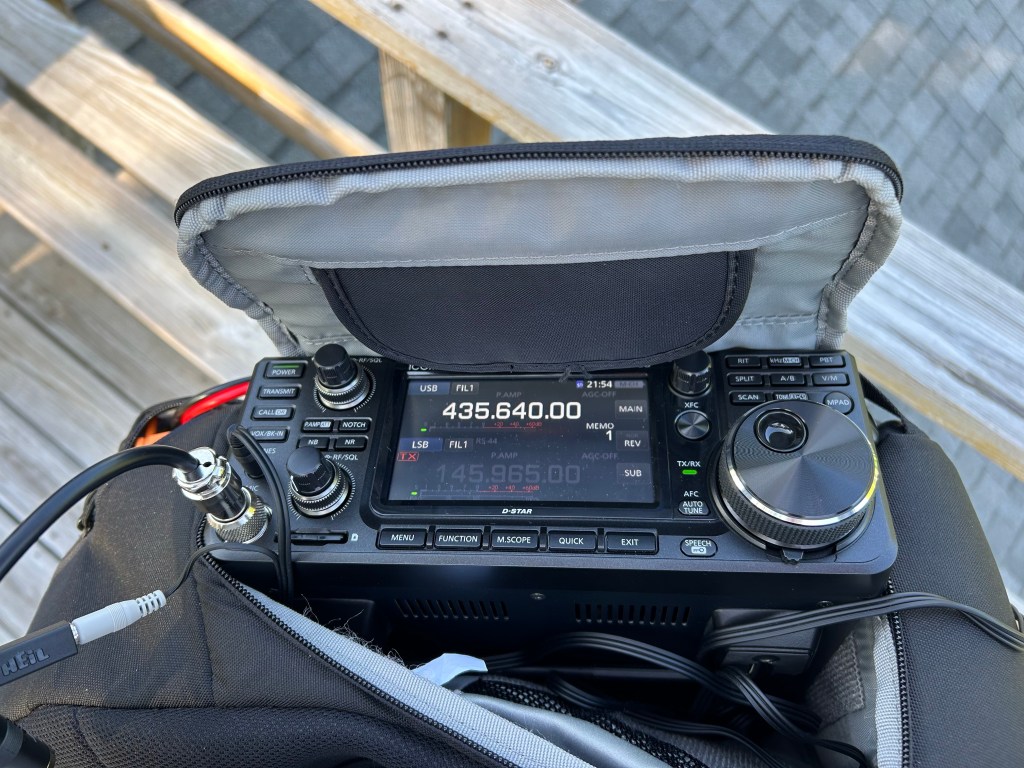
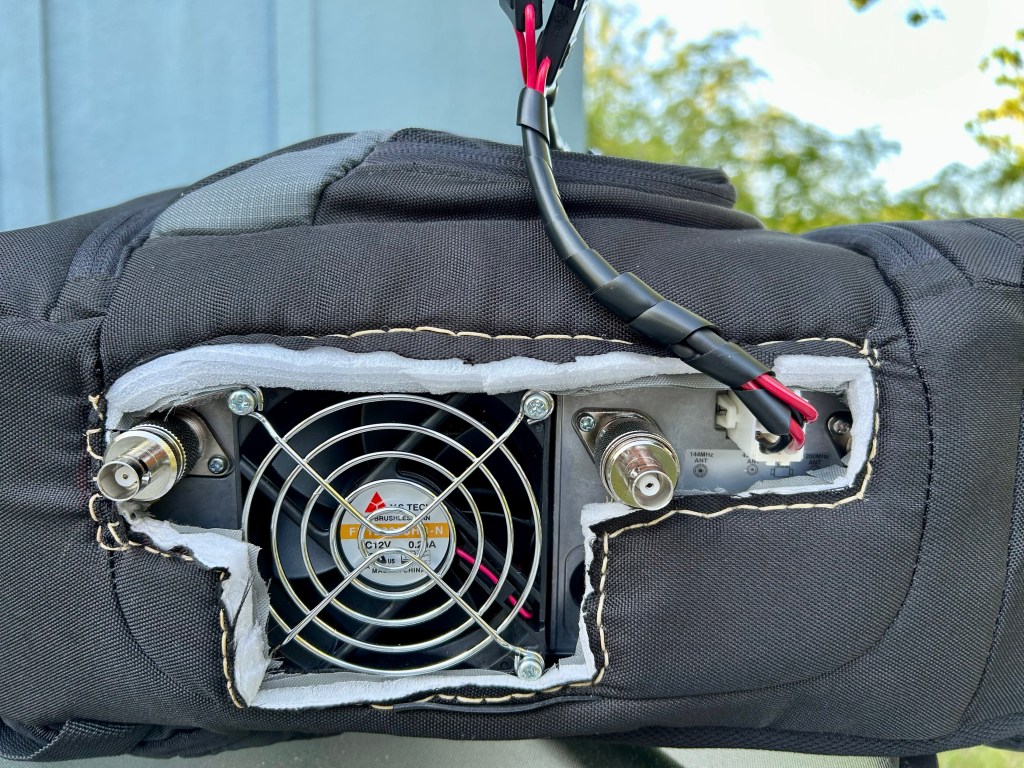
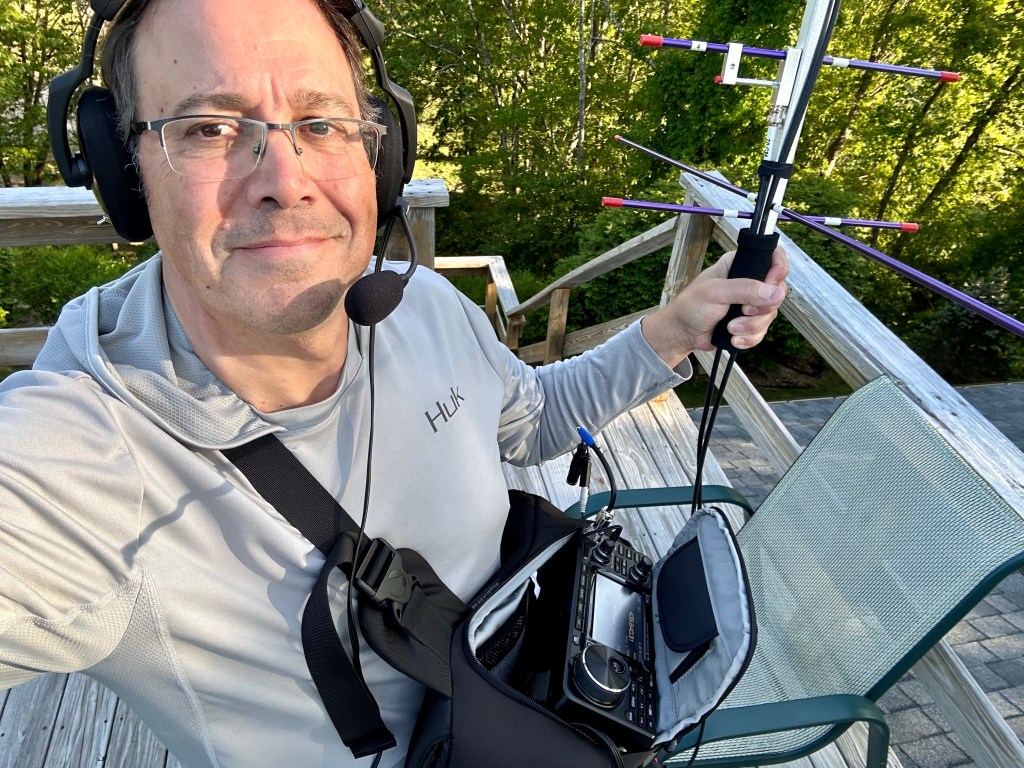



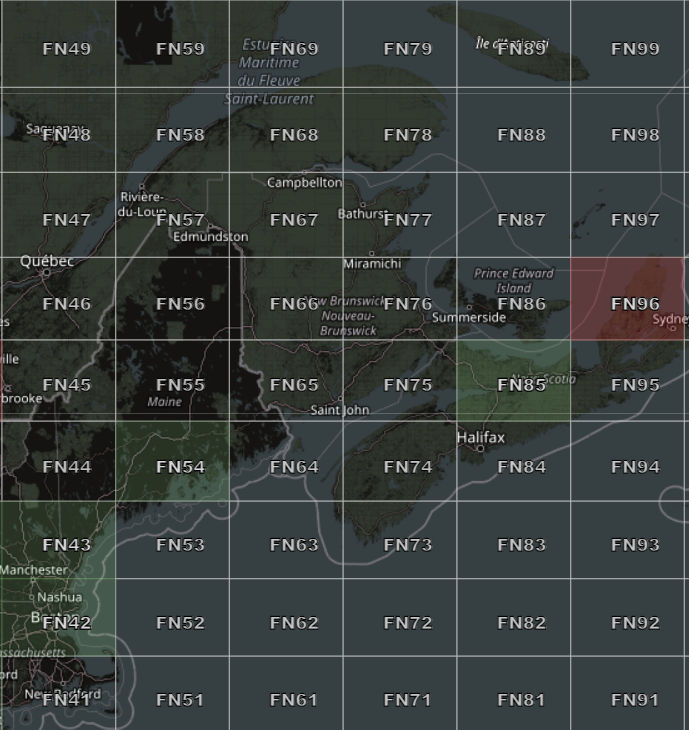
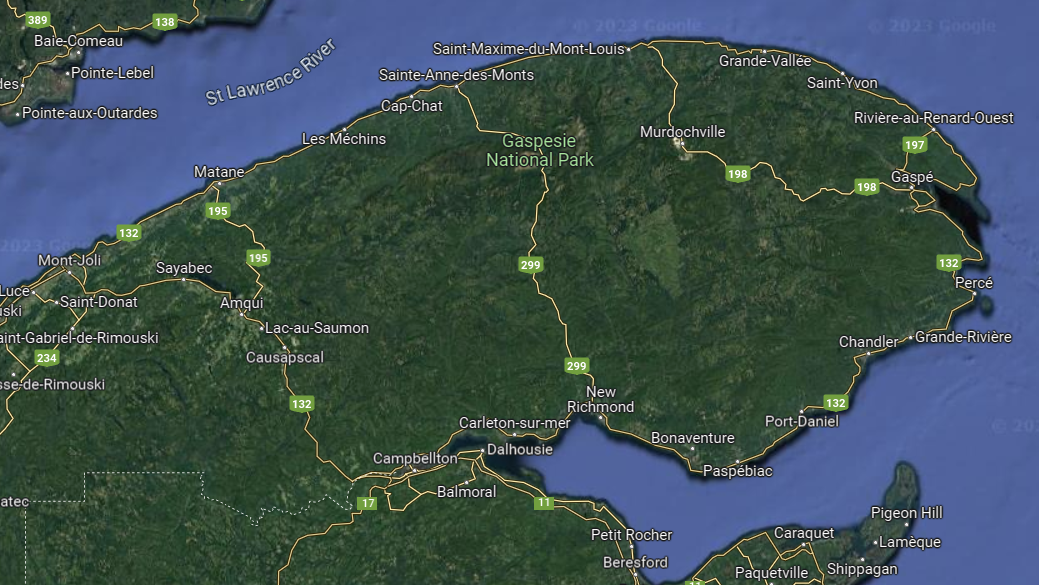


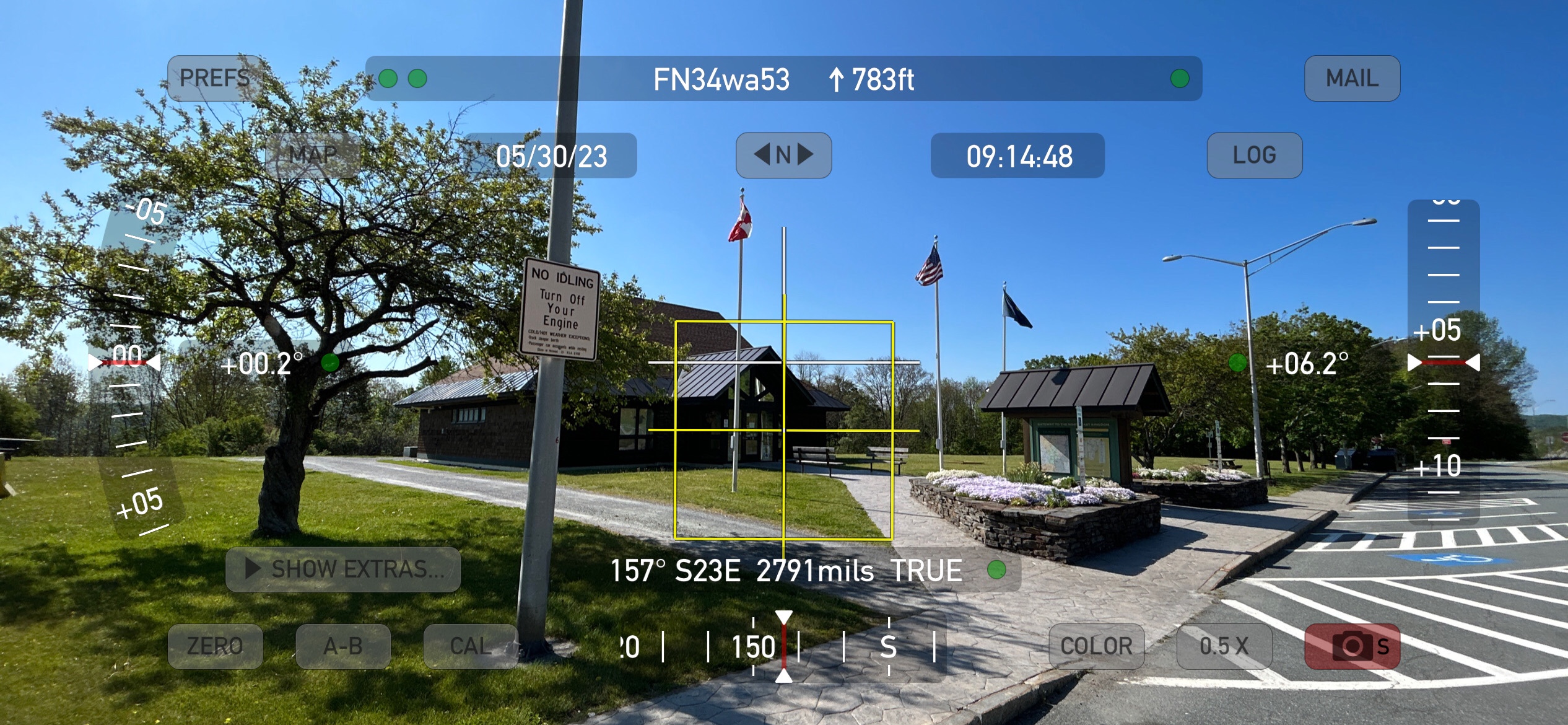

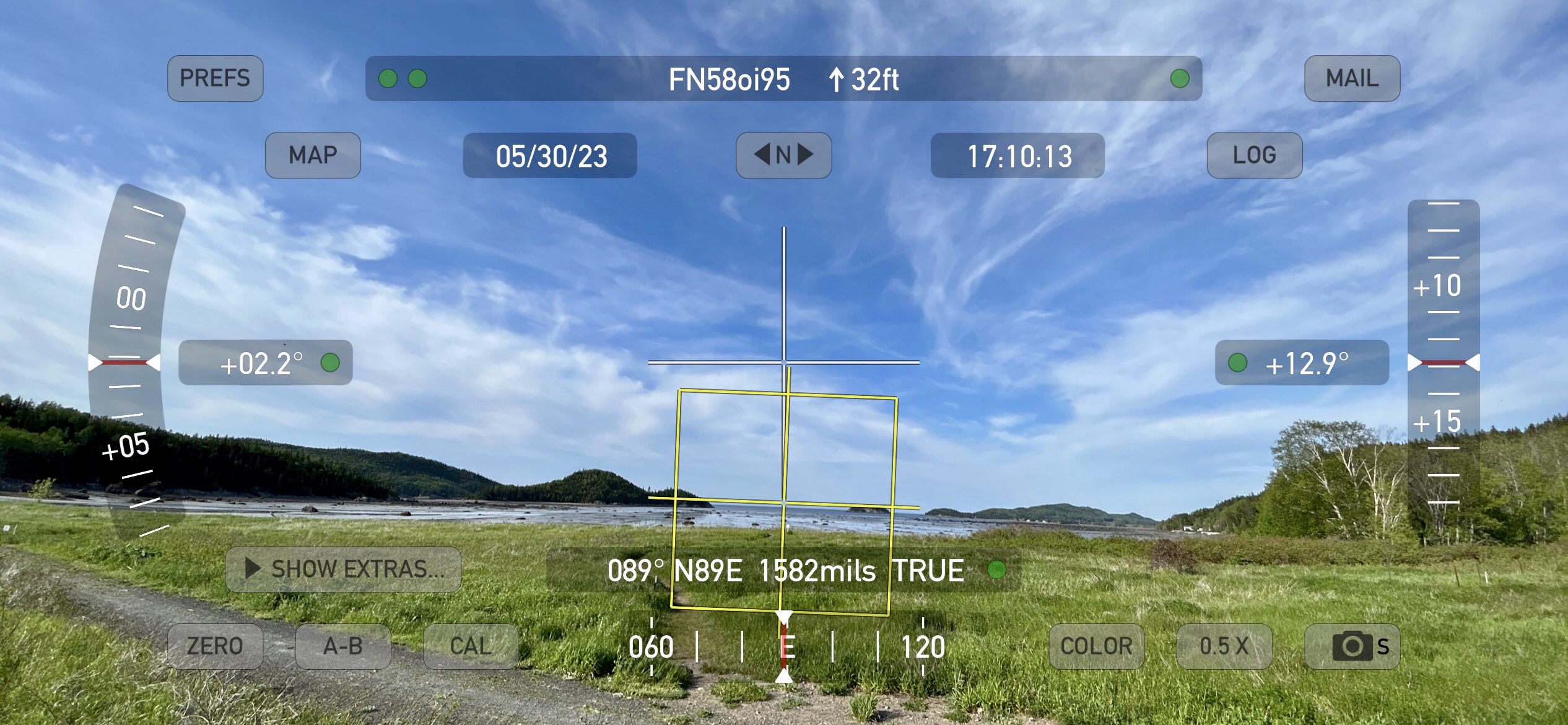
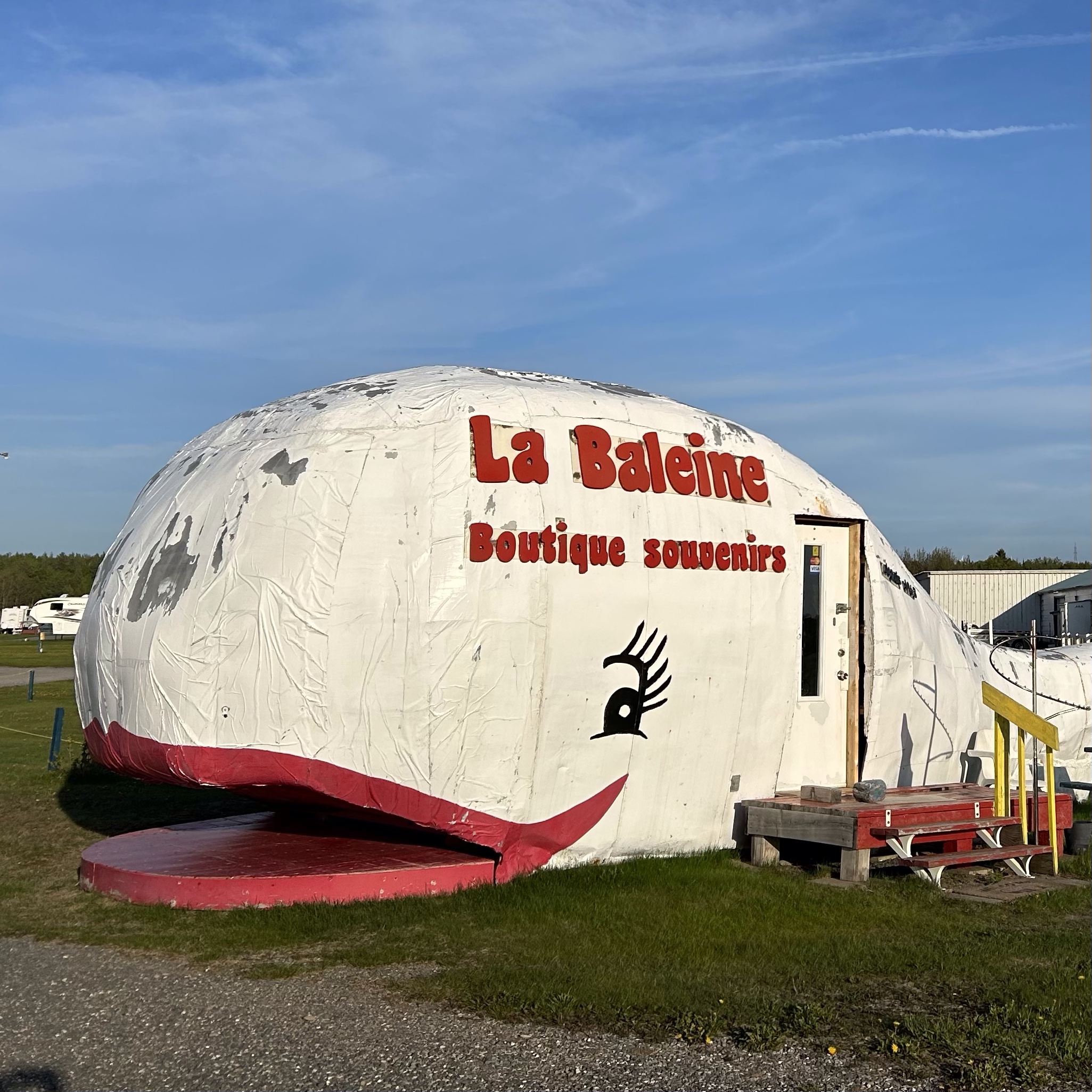


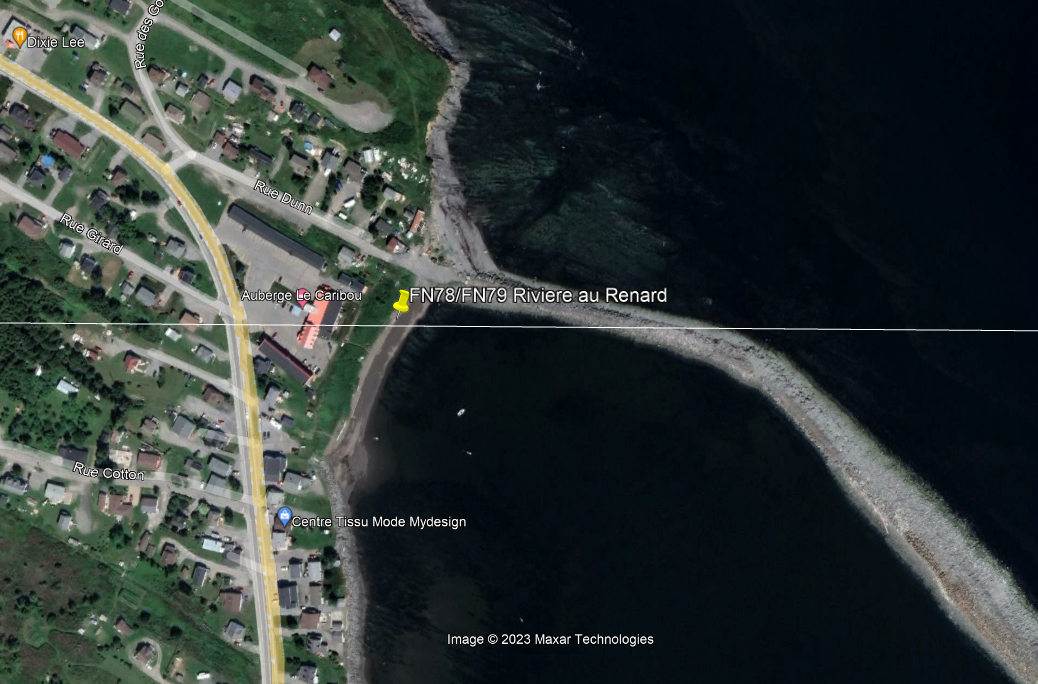


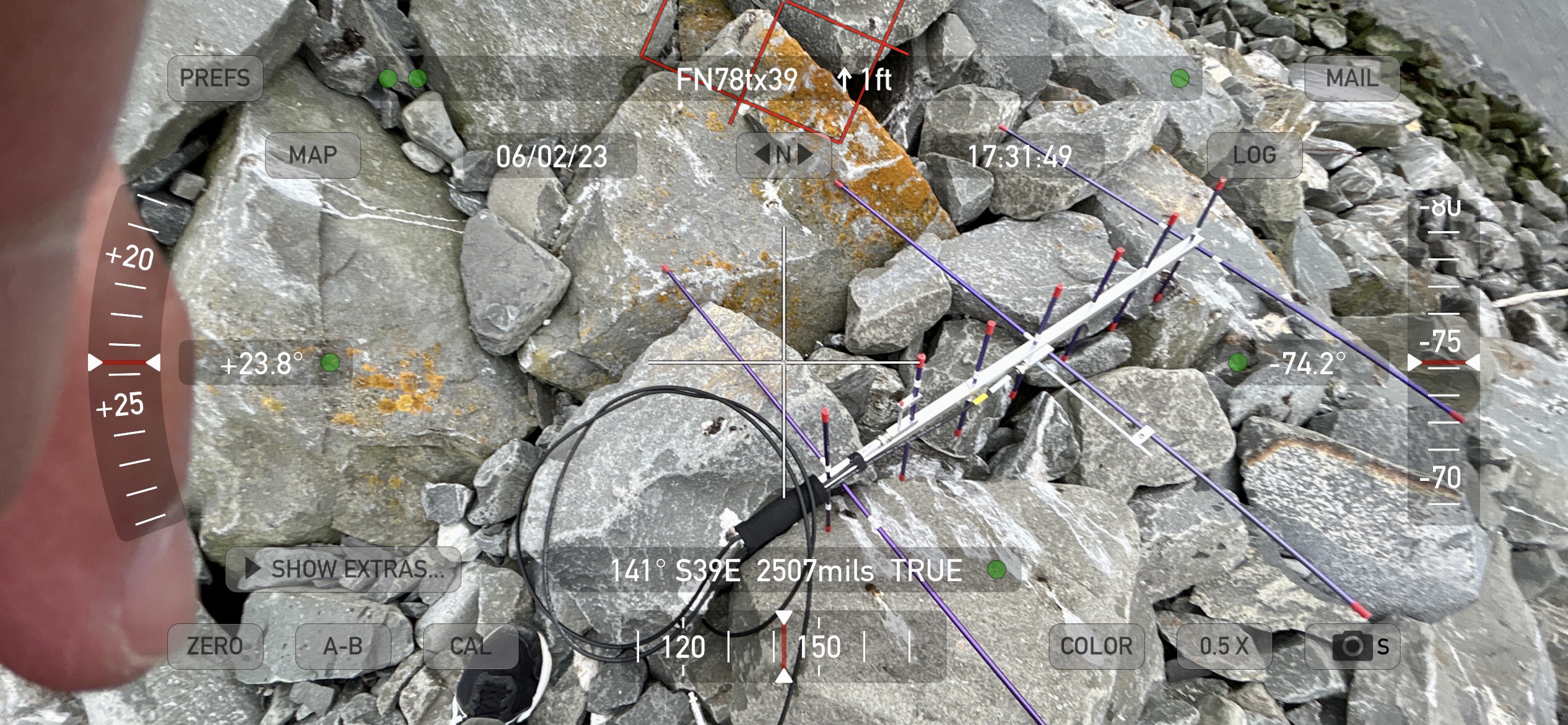

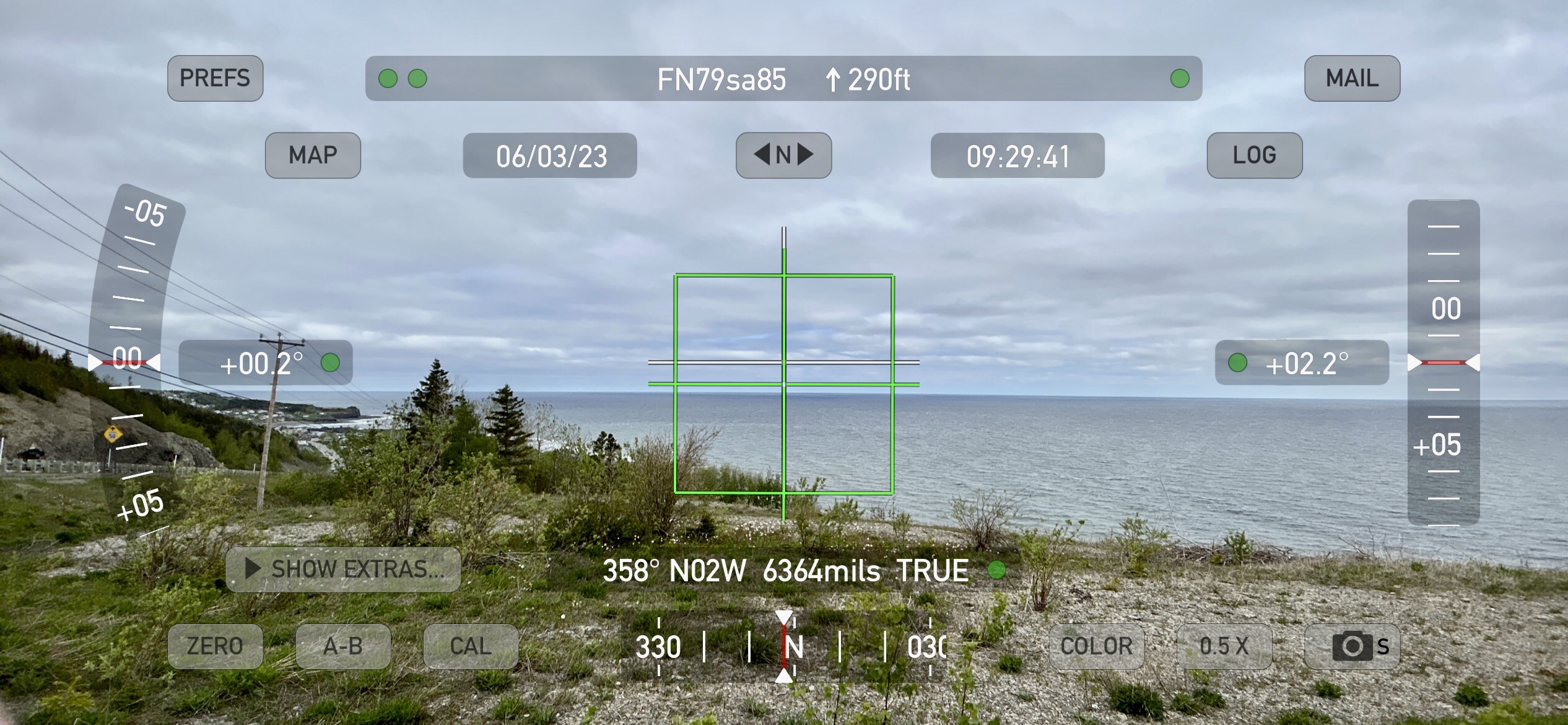


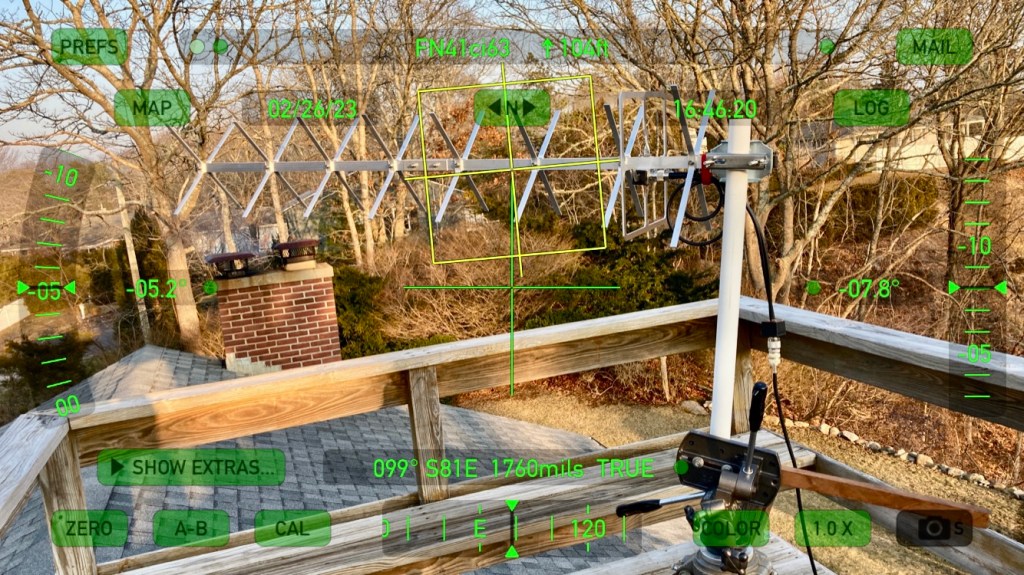


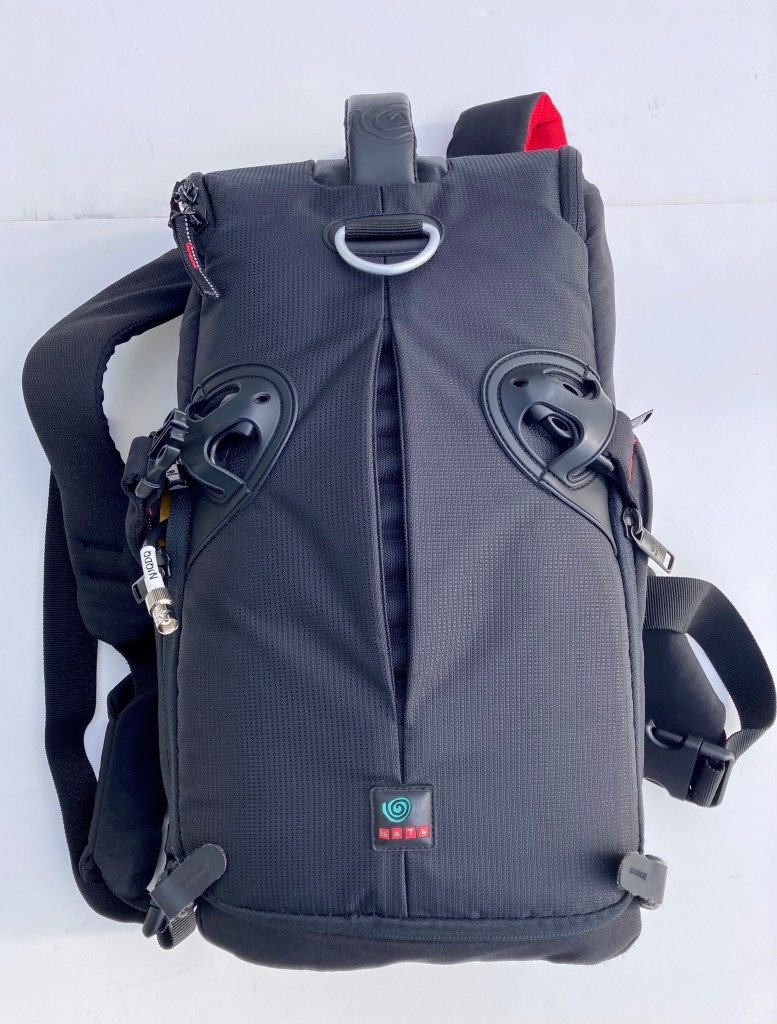
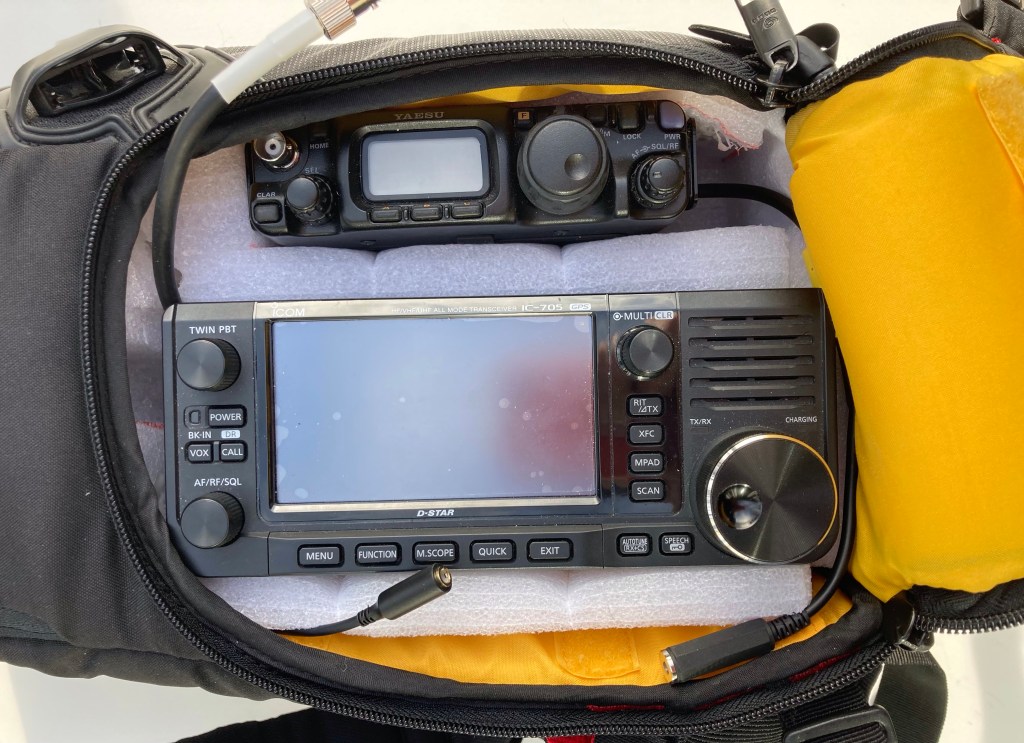
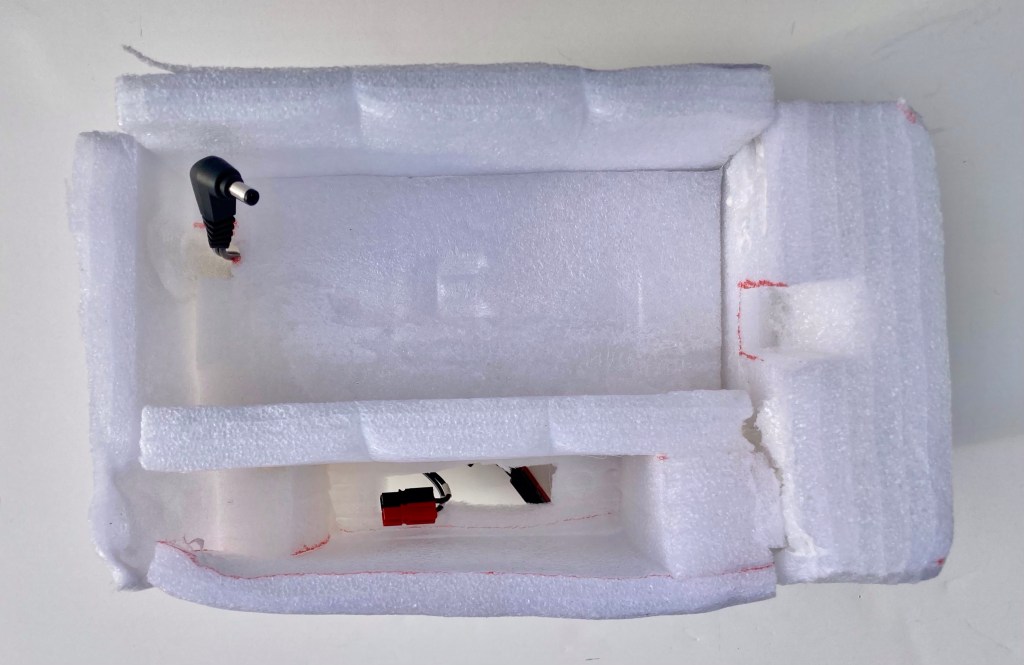
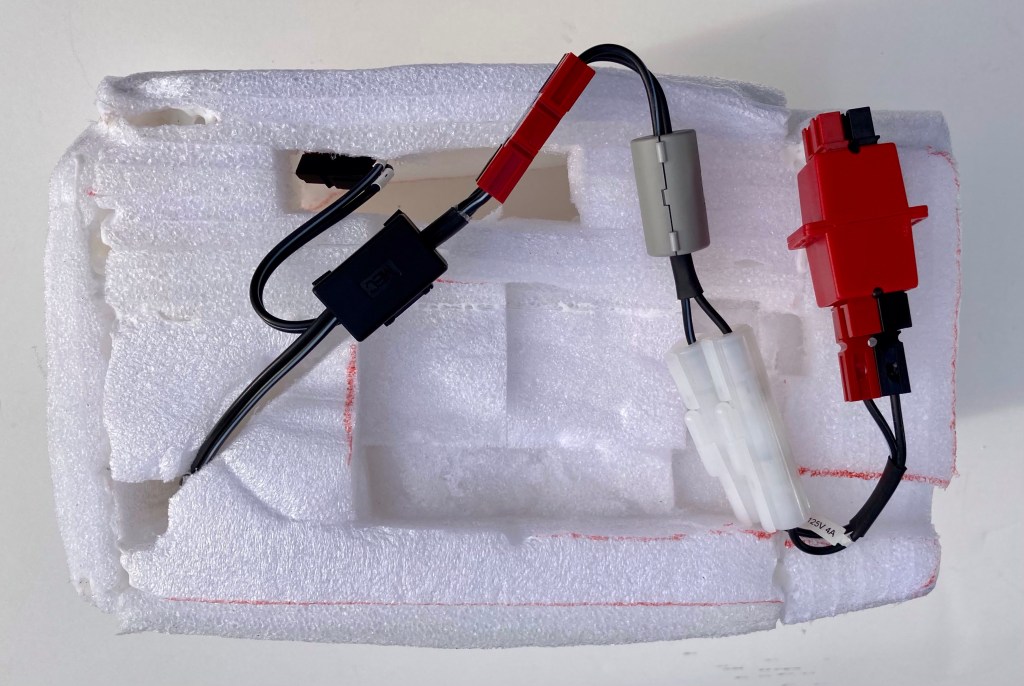

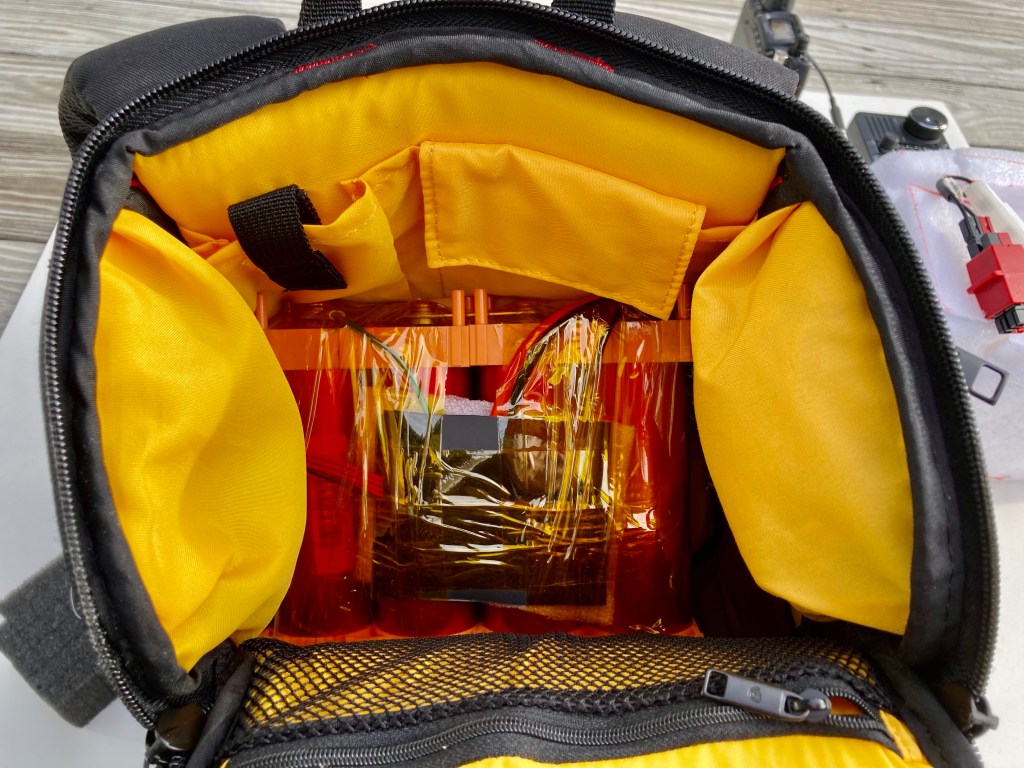
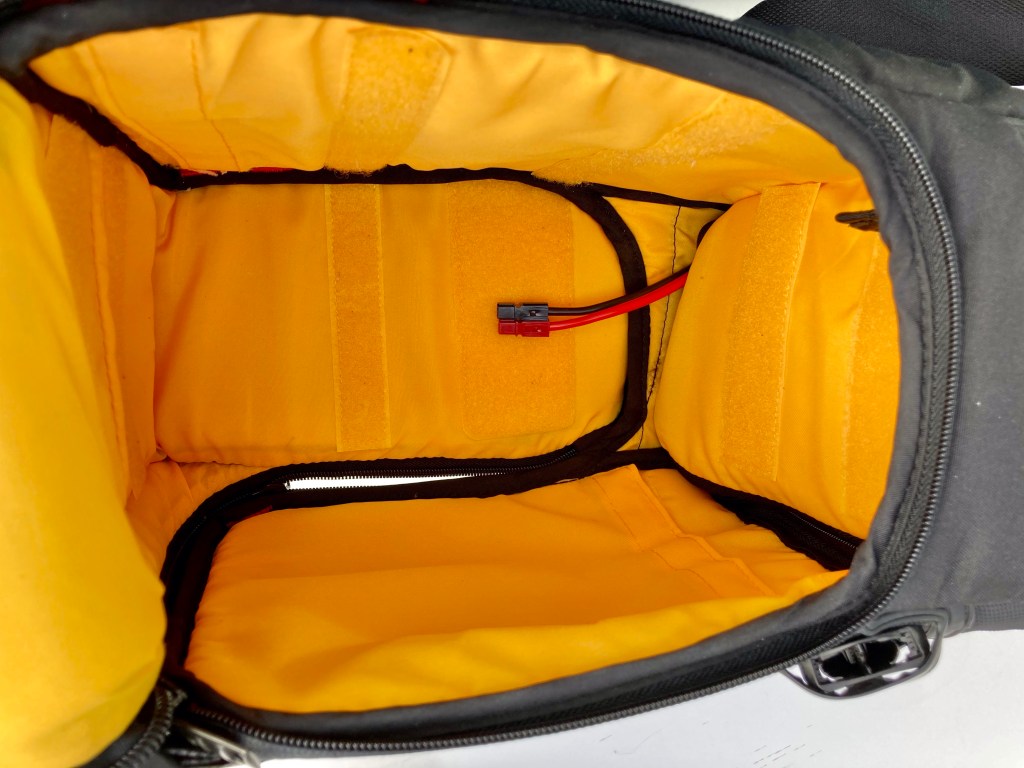


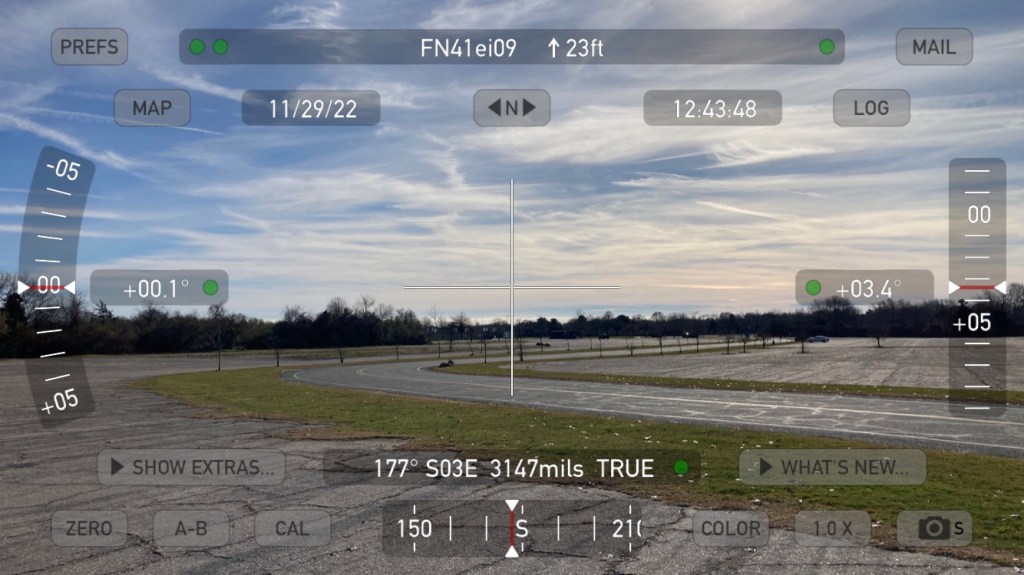
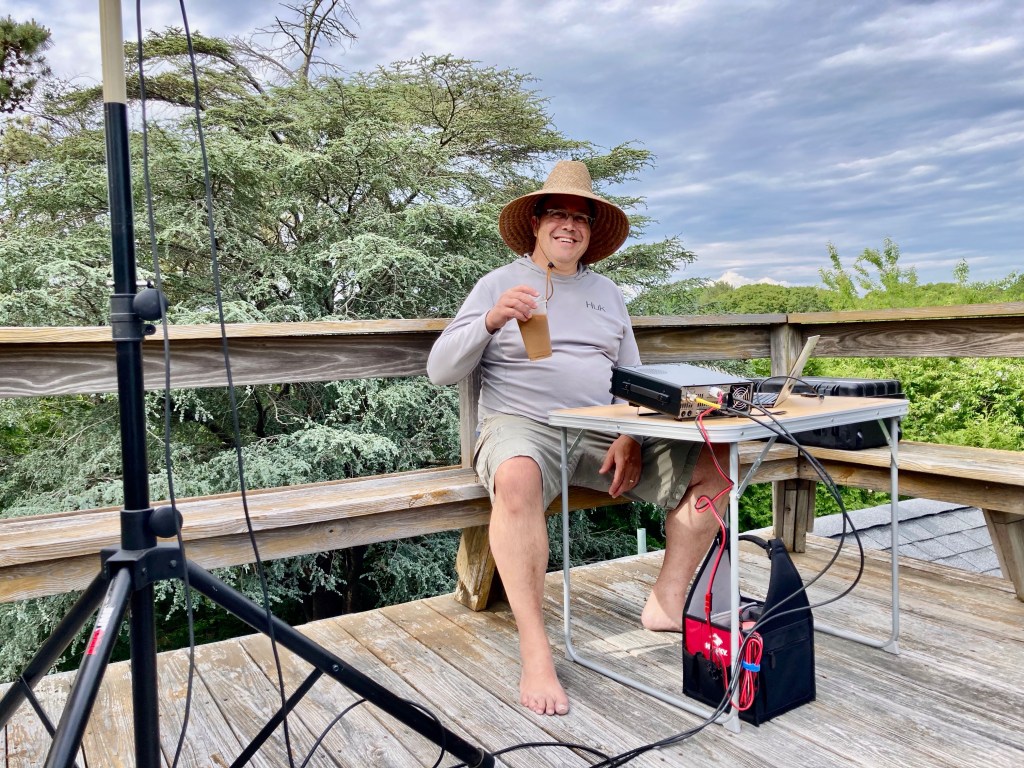
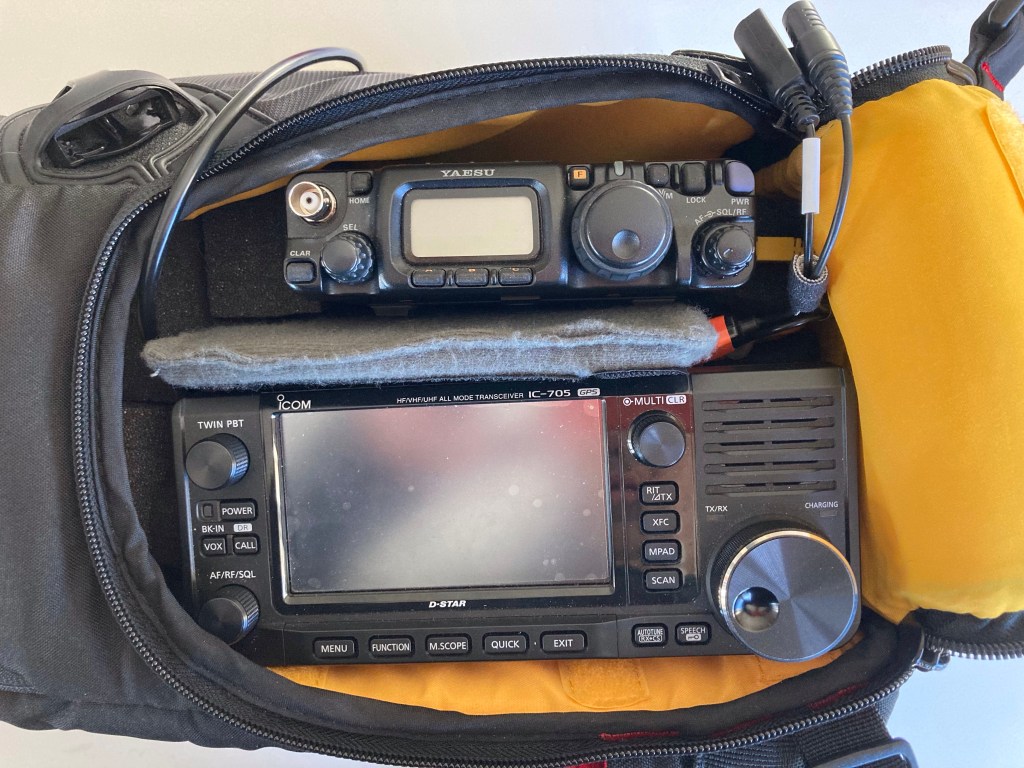
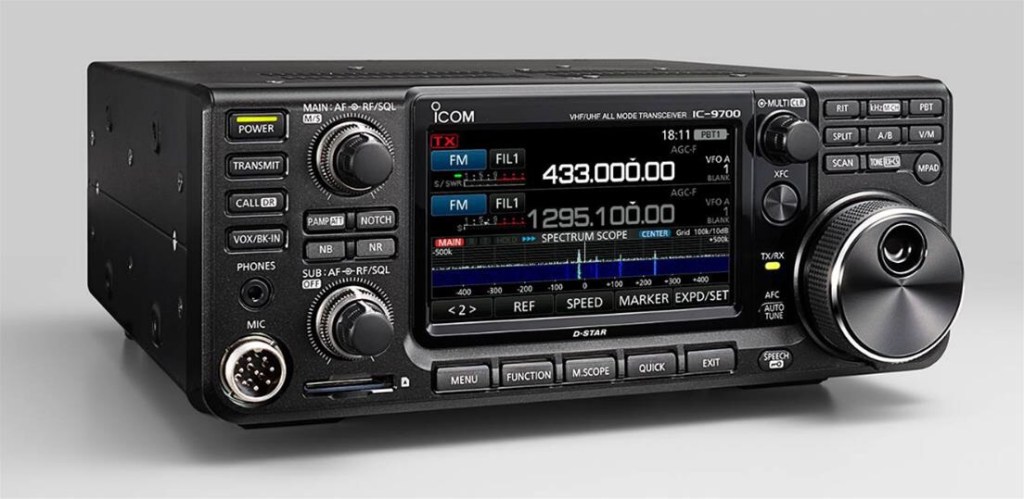
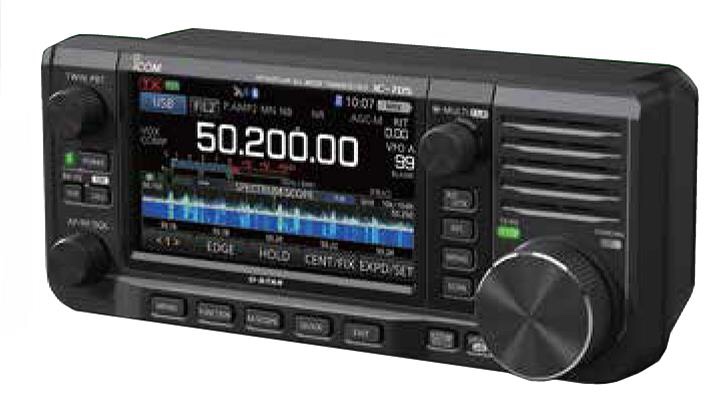
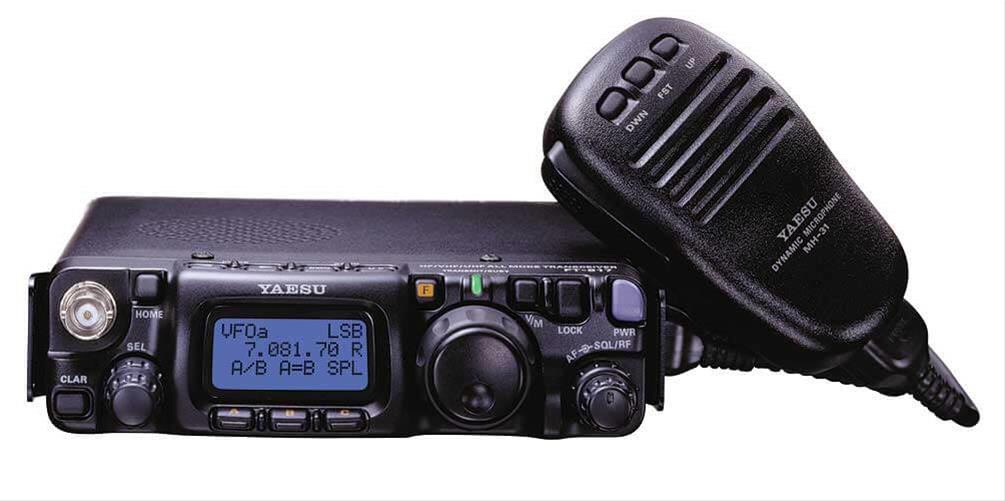
 petebrunelli